



Light therapy’s biggest myth? Joylux unpacks LED count

Key takeaways
- Red light therapy effectiveness depends on power density, irradiance, and dose, not just LED count.
- High LED counts can mislead consumers — the real impact lies in energy delivery and dose accuracy.
- Transparency and proper metrics, such as wavelength and irradiance, are essential for consumers to evaluate red light therapy devices.
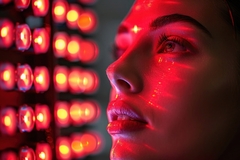
Red light therapy is gaining traction among mainstream beauty shoppers, but experts believe consumers and brand marketing are focusing on the wrong metric.
Most light mask devices are marketed by LED count, but efficacy actually depends on power density and dose. These measurements are rarely disclosed to consumers but critical to whether light penetrates tissue and produces a biological response, Joylux, a company specializing in wellness devices, tells Personal Care Insights.
“The red light boom has created a market where visibility is confused with effectiveness,” says Colette Courtion, founder and CEO of Joylux. The company, based in Washington, US, offers high-tech home-use devices that address menopause-related health concerns.
The CEO tells us that while a device with many LEDs may look powerful, if each LED emits low power, the total delivered dose may never reach beneficial levels.
“Consumers assume more lights equal more power, but science tells a very different story.”
Red light technology works by stimulating cellular processes that require time and energy exposure. It is about controlled, cumulative energy that tells skin cells to function more efficiently.
Courtion says that independent testing across the category shows that devices with very high LED counts often distribute energy inefficiently, producing bright surfaces without delivering therapeutic levels of light to tissue.
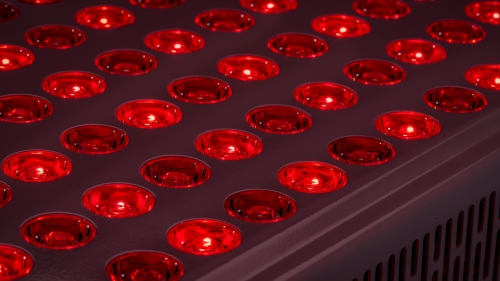 Joylux believes the number of LEDs in a device is a marketing metric, not a clinical one.By contrast, clinically designed systems prioritize wavelength accuracy, spacing, and energy delivery, sometimes using fewer LEDs to achieve higher power density.
Courtion believes that as LED devices proliferate in beauty and wellness retail, marketing claims have outpaced consumer education.
“Understanding metrics like irradiance and dose may be the difference between meaningful results and devices that look impressive but underperform biologically,” she says.
Power over quantity
Joylux holds 28 light‑based health technology patents. The company owns and files its own patents on red‑light and photo‑biomodulation devices used in its products. Its portfolio includes current and pending patents in Europe, North America, and Asia, covering various light‑based devices and related technologies.
Joylux’s solutions respond to dose, not visual brightness, as Courtion says that the number of LEDs in a device is a marketing metric, not a clinical one.
The wellness company designs around energy delivery and dose because cellular response is triggered by reaching specific thresholds. LED count indicates the number of light sources rather than the amount of energy that actually reaches the tissue.
“A device can have 200 LEDs, but if each one emits very low power or distributes energy inefficiently, the impact will be minimal. The effectiveness of red light devices depends on the energy delivered, not the quantity. Without adequate power density and dosing, even a device with a high LED count may not stimulate a meaningful response,” explains Courtion.
What consumers should care about
Joylux says consumers should focus on three key metrics: wavelength (nm), irradiance (mW/cm²), and total energy dose (J/cm²).
Red light is most studied in the 600–700 nm range of wavelength. This range is associated with cellular stimulation and mitochondrial activity. When mitochondria become excited, the process of forming new collagen and elastin begins. Colette Courtion, founder and CEO of Joylux, a company with 28 light‑based health technology patents.
Irradiance measures the power delivered to the tissue at a specific distance. Without adequate irradiance, light cannot stimulate cells. Studies suggest that red light therapy delivered at irradiance levels of 100–150 mW/cm² drives measurable biological changes in tissue.
“For red light to stimulate mitochondrial activity, the light must reach cells at a sufficient intensity. If irradiance is too low, the light may scatter or dissipate before triggering a meaningful biological response,” details Courtion.
“In simple terms, if you don’t deliver enough power to the tissue, you won’t activate ATP production, collagen synthesis, circulation improvements, or other benefits. Too low and you will get no response. Too high and you may have potential diminishing returns.”
Irradiance determines whether the solution is inside an “ideal window.”
“In intimate health applications, especially, precision matters. Delivering light at an appropriate metric ensures stimulation without overexposure, which is why device engineering must be intentional rather than purely aesthetic.”
Total energy dose represents the amount of light energy delivered over time. Dose determines whether you reach the threshold needed to trigger a response.
“These metrics together — not LED count — determine whether a device can perform effectively. At Joylux, we prioritize transparency so consumers can understand exactly what they’re receiving, rather than relying on confusing data,” says Courtion.
Catering to the skin
Joylux’s CEO says that the beauty industry is facing a buyer-beware situation. She explains that LED therapy users should think in terms of beneficial ranges.
“Different goals also require different doses. Superficial skin concerns often require lower doses than deeper tissue applications. Consistency also matters with smaller, repeated doses, which can be more effective than occasional overexposure,” says Courtion.
“The safest approach is to use a device that clearly discloses all information.”
Courtion continues that in many cases, devices are engineered for cost efficiency and visual appeal rather than biological performance.
“High-quality LED lights are expensive. High LED counts can create a perception of effectiveness while masking insufficient energy delivery. At Joylux, that philosophy has guided our development process — starting with biology first and building the device around it.”
Bridging the knowledge gap
LED light therapy that fails to concentrate at the proper intensity reduces effectiveness. From a user standpoint, this can lead to frustration and skepticism about the category itself.
Joylux believes it has a duty to design devices around the most effective methods, to validate results through testing, and to avoid The LED count simply indicates how many light sources are present. misleading metrics such as LED count.
“Red light is an incredibly effective tool when used correctly. Bridging the gap means translating complex science into understandable information without oversimplifying or exaggerating claims. Credibility is non-negotiable, particularly in women’s intimate health. We operate in a space where trust and safety must come before trends,” says Courtion.
“As red light technology continues to evolve, the future of the category will belong to brands that prioritize dose accuracy, transparency, and education. That’s the standard we hold ourselves to at Joylux, and one we hope defines the industry moving forward.”