



Texen and Quadpack: Recyclable materials slated pivotal across cosmetics packaging


Key takeaways
- The beauty packaging industry is shifting toward recyclable and monomaterial designs, with Texen and Quadpack focusing on PET, PP, and natural materials.
- With the upcoming PPWR, Texen and Quadpack predict that incorporating PCR content will have a significant real-world impact.
- The companies emphasize the need for data-driven sustainability practices and traceability, with a strong push toward chemical PCR at scale.

Sustainable beauty packaging today touches on “multiple design formats.” That is according to Texen and Quadpack’s senior director of marketing, innovation, and strategic development, Pierre-Antoine Henry, who suggests that recyclable materials are the most prevalent advancement in the cosmetics packaging arena to date.
Speaking to Personal Care Insights, and commenting on what truly “sustainable” packaging really means, Henry says it can refer to packaging solutions made of biodegradable, recyclable, or recycled materials. Texen and Quadpack form part of the same corporate group under the umbrella of PSB Industries.
“Ideally, designs are monomaterial or monofamily, so no separation is required before recycling. Sustainability can mean extending use and minimizing waste through refillability, reusable components, or minimal material use (lightweighting). It can also refer to a high restitution rate, so none of the formula is wasted, through systems such as airless dispensers. Importantly, these and more attributes can be built into the same design,” explains Henry.
He says the most sustainable solutions are circular, keeping the materials in a continuous loop through reduction, reuse, recycling, or composting.
Recyclables for real-world impact
Henry predicts that in the next few years, recycled content will have potential for “the most real-world impact” in the beauty packaging industry. He says regulations such as the Packaging and Packaging Waste Regulation (PPWR) will push brands to incorporate post-consumer recycled (PCR) into their packaging.
“Monomaterial design makes it easier for end users to recycle, removing barriers and encouraging recycling habits, although many recycling facilities still need to be optimized to catch smaller sizes.”
According to Herny, biobased plastics still have “some way to go” in terms of infrastructure and logistics. Even though refill systems have been around for years, brands are still held back by issues such as retail logistics and consumer uptake. “Deposit schemes are experiencing a revival in the beverage industry, but personal care is not there yet,” he adds.
Design solutions
Across the personal care arena, Henry observes a clear “shift toward the use of recyclable and recycled plastics.”
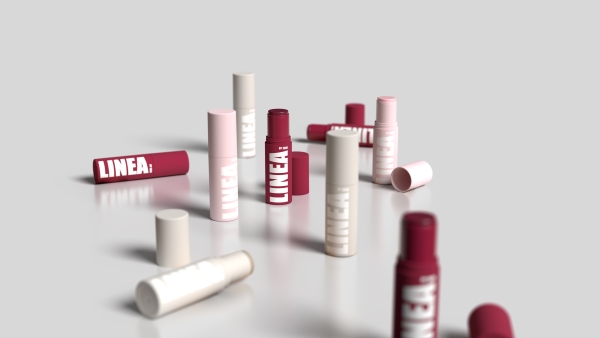 Quadpack’s newest product launch is the Linea PP Panstick, a refillable, monomaterial design with PCR options.As packaging providers, Texen and Quadpack have been transforming their portfolio away from styrene acrylonitrile and acrylonitrile butadiene styrene toward polypropylene (PP) and polyethylene terephthalate (PET). for example, alongside natural materials like certified wood — keeping them monomaterial wherever possible.
“Our PET injection and decoration expertise means that our clients don’t have to compromise on aesthetics and performance,” notes Henry. “In the current economic climate, sustainability seems to be taking a bit of a backseat, and the 2030 target of the PPWR seems a long way away, but packagers are collectively preparing the ground to ensure that the shift is as painless as possible.”
Meanwhile, some airless systems, like Quadpack’s Regula Airless Refill or Ultra Solo, have been reengineered with metal-free pumps in monofamily solutions, while ethylene vinyl alcohol barriers can be compatible with recycling. “Both are popularly used for formula protection. Airless packaging is especially convenient for users, as they automatically dispense the correct dose and can be used at any angle,” says Henry.
“Reusable packaging formats are not generally as front-of-mind as they perhaps were five years ago.”
Nevertheless, Henry says the company’s focus is to have a positive impact on our industry and always push the boundaries further as a sustainable business and a B Corp.
“We are here to inspire, but also to follow market needs,” he underscores. “While we are seeing various initiatives leveraging reuse, to this day, none seem to indicate a real market shift, and reuse is now more common in personal care than in cosmetics, with the notable exception of fragrance, with refillable travel sprays.”
“The upcoming PPWR regulation will likely accelerate the transition of products to embrace reuse opportunities and push brands to overcome the pricing (refill versus full pack), supply chain (in-store refill, at-home subscription, loop), and value perception of their consumers. In any case, almost all our new packs are either refill-ready or simply monomaterial and lightweight to ensure a virtuous end of life.”
Building trust around sustainability
According to Henry, from a brand perspective, life-cycle assessments (LCAs) are “crucial” to calculate the Scope 3 carbon footprint. He says: “Every solution in Quadpack’s portfolio already comes with a life-cycle assessment, while Texen offers LCAs for custom solutions. Both companies favor a data-based approach to sustainability, and the Science-Based Targets initiative has validated Texen’s targets.”
Regarding traceability, the Quadpack Wood factory offers wooden packaging and components with either the Programme for the Endorsement of Forest Certification or the Forest Stewardship Council certification. Meanwhile, Texen and Quadpack can manufacture solutions with International Sustainability & Carbon Certification-certified PCR on request. Transparency about material origins and impact helps brands to make informed choices that support their sustainability goals. It also sets a baseline for improvement and fosters trust.
Quadpack is part of the B Beauty Coalition, a global alliance of certified B Corporations dedicated to shaping a more sustainable and inclusive future for the beauty industry. The Coalition operates under three pillars: Innovation for Best Practices, Collaboration and Shared Knowledge, and Advocacy and Education.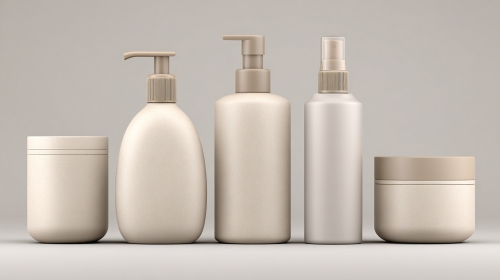 Upcoming regulations, such as the PPWR, will push brands to incorporate PCR into their packaging for beauty products and cosmetics.
“Together, these pillars drive measurable outcomes that foster collaboration across the entire value chain, from material suppliers to brands and consumers,” says Henry. “In terms of sustainable packaging, the Coalition has developed resources designed not only to support member companies but also to influence the wider industry.”
“These are available through the B Beauty Navigator, a free resource hub where members can assess their current packaging portfolio and identify actionable next steps to advance better business practices.”
Looking ahead five to 10 years, Henry envisions that Quadpack and Texen “should have chemical PCR at scale, so 50%-plus recycled material should become the norm for packaging in polyethylene, PP, or PET.”
According to Henry, the next frontier for the companies is decoration to “ensure packs are not only recyclable in theory, but also properly sortable — even when heavily decorated, as is sometimes the case in the beauty industry.”
He expects to see innovation and breakthroughs in infrared-compatible decoration, as well as lightweight decoration to support density sorting.
“We also see potential shifts in functional and flexible plastic materials like thermoplastic elastomer, which could move toward new formulations to exclude any styrenics, while still being compatible with demanding next-generation formulas, like in makeup. There is even a potential resurgence of liquid silicon rubber as a viable alternative in some cases and applications,” Henry concludes.