

Ulta Beauty outperforms in Q3 and raises annual financial forecasts

Key takeaways
- Ulta Beauty raised its full-year sales and profit forecasts after Q3 results exceeded expectations.
- Growth was driven by higher comparable sales, expansion efforts, and an increased focus on K-beauty brands.
- K-beauty’s global surge continues to drive growth and innovation for skin care and makeup products.
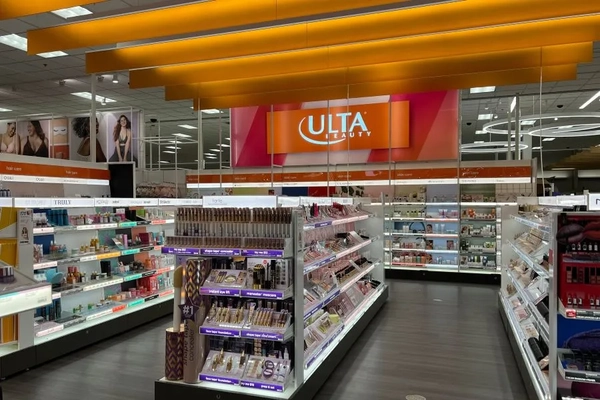
Ulta Beauty has increased its full-year outlook after achieving strong financial results for the third quarter of 2025 and bets on a fruitful holiday season. The report showed gains in net sales, comparable sales, and gross profit, alongside a renewed commitment to expansion plans.
Shares of the company also reported third-quarter results above estimates, which were up about 5% after the financials were posted. The company’s stock has increased by approximately 33% this year.
Net sales increased 12.9% to US$2.86 billion compared to the average analyst estimate of US$2.72 billion. The rise is attributed to stronger comparable sales, the acquisition of Space NK, and new store openings. The company now predicts annual net sales of approximately US$12.3 billion, compared to its prior forecast of US$12 billion.
Comparable sales increased 6.3%, driven by higher average ticket and transaction volumes. Ulta now expects comparable sales to rise in the range of 4.4% to 4.7% by the end of the financial year, surpassing the previously anticipated forecast of 2.5% to 3.5% growth.
Gross profit was 40.4% of sales, reflecting lower shrinkage and improved merchandise margin. Ulta Beauty said it expects annual profit of US$25.20 to US$25.50 per share, higher than the prior forecast of US$23.85 to US$24.30.
“As we look ahead to the all-important holiday season, we know many consumers’ wallets are pressured, and they are seeking value,” Ulta CEO Kecia Steelman said in a statement.
 Ulta's CEO says K-beauty is a growing space for the retailer.The beauty retailer also lifted its outlook earlier this year after revealing its Q2 results exceeded expectations.
K-beauty boosts performance
Ulta also attributed a part of its growth to its recent investments in K-beauty. The retailer expanded its K-beauty portfolio in 2025 by adding brands such as Medicube, TirTir, Fwee, and Unleashia.
In an earnings call, Steelman stated that the company’s K-beauty assortment “continues to resonate and drive skin care sales.”
“We saw space for growing K-beauty trends in both skin care and makeup.”
This year, K-beauty has solidified its place in the cosmetics industry and is only poised to get even bigger.
In July, South Korea surpassed the US to become the second-largest global cosmetics exporter, trailing only behind France. According to the Korea International Trade Association, the country exported US$3.61 billion worth of beauty products from January to April, edging out the US with US$3.57 billion.
The K-beauty craze has only grown in momentum since then. In October, South Korea’s cosmetics exports surged to a record US$8.52 billion in the first nine months of 2025, up 15.4% from 2024, according to the Korea Customs Service. The customs service said the achievement marks the longest such run in the sector’s history.
At the same time, the US overtook China as Korea’s largest export destination.