



Raphael Gonzalez, managing director at the Savannah Fruits Company, highlights the company’s products and echoes the Japanese market’s emphasis on natural ingredients. He underscores a traceable supply chain that ensures quality and sustainability for the Asian market. By maximizing value addition at the source, the company supports local communities, particularly women, while enhancing product quality and promoting equitable development.
So my name is Rafael Gonzalez.
I'm the managing director of the Savannah Fruits Company.
It's the first time we are exhibiting in Japan, so we are very, very excited to showcase and introduce our products, African products to Japan, Japanese market.
So we are here to, to explain, to present.
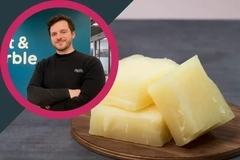
Cosmetic companies, manufacturers, what we do, where the products are coming from, and how it is produced, so we are actually presenting shea butter.
From the tree, baobab oil, extra virgin coconut oil, and African black soap, everything from West Africa, so we source our product from various countries Ghana, Ivory Coast, Burkina Faso, Mali, and Togo.
All the products are manufactured by women cooperatives, so we help the women to get themselves into cooperative.
We organize the cooperative.
We train them on quality, on business administration, and we prefinance them so that they can solve the raw material.
Like the fruits or the nuts, and they collect it, they process it, and they make semi-finished or finished products like black soup, shea butter that we either sell as it is or we send to Europe for further refining.
And the idea is to propose to manufacturers or even consumers to have a direct link with the producers, so we offer them full traceability, digital traceability with a digital traceability system.
Where every lot is recorded and we can show the journey from the farm to the consumer, so this is a very powerful tool for brands who wants to showcase to their consumer where the product is coming from and how it is produced.
So besides that we have all kinds of certification, organic Care for Life, because it's all about, it's not all about the product itself, but it's the product and the story and the story of the people who are actually involved in making the product.
So we're working with more than 65,000 women in Africa.
And we try to make an impact on their lives, the lives of their family through the business and through manufacturing high quality products for the cosmetic industry.
So this is why we are here this week and we are very excited to introduce those products to the Japanese market.
Yes, it must be very exciting for the Asian consumers to see what's going on by the African manufacturers.
Given the growing preference for natural ingredients in the Asian market, how do you ensure that your traceable supply chain meets both the quality expectation and the sustainability standards of consumers in the region?
So this is our role.
We are in Africa.
We are working with the producers.
We are working with the certification bodies.
We are working with all the international quality standards to deliver the best quality and product that can be used worldwide.
So we are currently selling a lot in America, in the US, in Europe.
We are meeting all the standards, and we want to develop more business in Japan.
We know the standards are quite high here, but we're getting the certification, all the certification for organic, for example, but also all the quality standard certification so that we can supply the the best quality and again.
Respond to the demand of the consumer for natural products and natural products with an impact, a positive impact on the planet and the people who are making the product.
So we are very excited for your new launches in Japan.
How does your approach of maximizing value addition at the source benefit both the local communities, particularly women, as you have just mentioned, and the overall quality of your product?
So what our business model is a bit unique because we're trying to maximize the added value at source, meaning that instead of just buying raw material from from rural areas, we try to bring the added value closer to the producing communities.
So instead of sending the raw material to a port or export to another country.
We tend to organize the cooperative to produce to process the raw material into finished products in their communities, so we have a lot of small processing units in very rural areas where the women are involved in the processing and the value addition on their products.
So instead of buying sheer nuts, for example, By shea butter that are made by the women in their communities, so that will create value to them, more money so that they can invest in in their community or their processing facility or even in their children's education so that it breaks the poverty cycle and it gets those communities to improve their lifestyle.
Thank you so much.
Could you elaborate more on the unique feature of your products that is different from the items that can be commonly found in the Asian market?
It's African.
It's 100% natural, all organic, fair trade, so it's basically good for for the consumer, for the people, for the skin, for the hair.
So it's a very good.
They are very good cosmetic ingredients and it's good for the people who are making it and the planet in general because we help the communities to produce according to very high environmental standards.
And the impact on their population on these communities is huge.
It's about making good products, good for the people who are using it, but also for the people who are making it.
That sounds very impressive.
Thank you so much for being here with us.