
Innova Market Insights presents global baby care market data, trends and popular ingredients
24 Oct 2023 | Innova Market Insights
The baby care market is shifting as Millennials are becoming parents with different purchasing choices following the COVID-19 pandemic. Sugandha Bandyopadhyay, team lead for Beauty, Personal Care & Household at Innova Market Insights, remarks on the speed at which the global baby care market is growing while commenting on popular product ingredients, packaging types and claims across different regions.
Hello.
Welcome Seganda to Personal Care Insights interview.
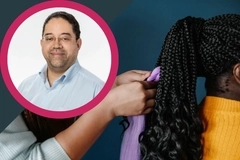
My name is Vena Patelel, acting editor at Personal Care Insights, and in this interview, we will present Innova Market insights data and findings with a focus on the baby care market, trends, popular ingredients, and key consumer segments.
It's great to have you today, Sagana.
Could you please introduce yourself.
Hi, Wanda.
Thank you so much for having me for this interview.
It's really an honor.
I am Shriwanha Bondapadhai.
I, work from India, and I lead the team of beauty personal care and household from here.
OK, thank you so much.
Let's just jump right into the questions.
The first one is, how big and how fast is the global baby care market growing, and what are the trends of different product types?
All right.
So, I'll start with a short introduction with what baby care comprises of.
The subcategories that we cover include diapers, diaper cream, and baby wipes.
Going into how the market is going, so I have been doing a bit of a study and we do make reports relating to the different categories in personal care, including baby care.
So, from April 2018 to March 20 2023, we observed that by 10% CHR, the baby care market has been going, growing, and, very importantly, there was also a 17% YOI year over year growth for this market.
While the size of the market itself is mid-sized in general.
It is still showing quite a promising growth, and especially with a lot of trends in terms of transparency are affecting this specific market, we can, we can expect that in the future, we will see more such innovations coming to the aspect of the trends that are affecting product types.
So the top trends or the top.
Claims that I would like to pinpoint are ethical packaging, as you know that sustainability is such a very important discussion in this day and age, and the baby care market with, you know, baby wipes playing such a big feature into the baby care segment itself, ethical packaging, especially the material with which the wipes are made, sustainability features here.
A lot.
Another key claim would be pH neutral and alcohol free claims.
And of course, since trust is one of the most fundamental basics of, you know, interactions with customers, who are your audience in the baby care market, dermatologically tested, ophthalmologically tested, such doctor recommendation claims also feature, besides the free from claims in general.
Mhm.
So what are some product ingredients, packaging and functionality that are emerging and popular, and how may this vary across the regions?
So, I got into this very interesting habit, which is something that I really like to pursue as an exercise, as an analysis, is that I do like visiting supermarkets every week and seeing what is new on the shelves.
I believe a personal interaction with the products that are there really helps me understand how the market itself is working, and it gives me a realistic sense of any particular category that I'm dealing with.
So coming to ingredients, one thing that I noticed is how aloe vera as an ingredient is really coming into the spotlight with baby care.
Right now, you know, as, if we do a very rough calculation, nearly 1 in 5, baby care products are featuring aloe vera.
So the big question is why aloe vera right now, because aloe vera is something that we often relate to nourishing skincare.
So, One of the basic reasons why would be how nourishing, obviously, how refreshing, aloe vera is as an ingredient, and of course it's anti-inflammatory benefits.
So aloe vera is definitely an ingredient to look out for in the baby care segment.
The next list of ingredients would be.
Our vitamins, mainly vitamin E and vitamin B5.
So vitamin E is called Tocopherol and vitamin B5 is panthanol.
Besides that, we have some natural essential oils as as some butters like almond oil and shea butter.
Trends are affecting the baby care market.
I think the primary focus would be, one of the top 10 trends that were highlighted in the top 10 trends 2023 for personal care by Enova, which is, actives or functional actives in personal care.
Consumers want to know their ingredients, consumers want to know what they are buying, what they are purchasing in terms of an ingredient and what their functions are, how it can help their babies.
So definitely natural ingredients.
Because, of course, there is, you know, the possibility of much less side effects compared to artificial counterparts, and health is such a very important aspect of baby care as a market.
Besides natural ingredients, there is the nutritional ingredients or skin-friendly ingredients.
How I would say that aloe vera is one such skin-friendly ingredients, and then the nutritional ingredients rising, it would be the vitamins, vitamin E and vitamin, B5.
Coming to the region, that would be, so I think when we observe regions in baby care, a very interesting aspect is also it gives us an idea what the consumers might be looking for.
Of course, I can't say for 100% that that is exactly what we are looking for, but you can gauge an idea, which also helps us understand what the dynamics are.
So let's take Europe.
As an example.
So in Europe, the primary observations were for dermatologically tested and ethical packaging, being the top features in the baby care products.
Now, this is very, poignant to me because, you know, Europe, the European Union is coming up with new legislations which, are banning some really toxic chemicals in.
Different categories of personal care and cosmetics, and this is definite and such government legislations are also affecting the baby care market, which is why, most of baby care products in Europe feature a dermatologically tested claim, as as ethical, ethically packaged or sustainably packaged claim, because Europe is going miles when it comes to, you know, ensuring that sustainability is maintained.
Both in ingredients as as the packaging process of the of the products itself.
The next I would take up is Asia.
So in Asia, we observed that alcohol-free and fast absorbing claims are quite large.
So, of course, fast absorbing is a very functional claim that is very important in baby diapers, especially, and with fast absorbing before, while initially, you know, in older.
Products we had noticed, the terminology fast absorbing technology.
Now it is going into more and more specifics, like, you know, how fast is it absorbing?
Is there any patented technology involved with the fast absorption process?
Or like how long lasting it is, how long a baby can wear that diaper.
They're even giving times like, you know, soothing sleep for 8 to 12 hours.
So that is a functionality that is being very much featured in, Asian, in Asian products.
Besides that, alcohol-free is also a very important, free from claim that is being featured in Asian products.
In Latan, we are seeing a large presence of long-lasting as as dermatologically tested claims.
Long-lasting is a claim or a feature that I would definitely say is , a convenience-related claim as as one relating to functionality.
So, definitely, that is one of highlights and of course, the consumer awareness is also very visible with dermatologically tested claims also being featured in LA.
In North America, we, we are seeing fragrance-free claims which are rising.
So this is another, important highlight into the perspective of the North American consumer, into their awareness, how, you know, more and more knowledge is building up according, about what they want to use for their infants.
Fragrances might have some irritants in them.
Which may affect a sensitive baby's skin.
So fragrance-free is really growing in North America.
It is really being featured and it is getting a lot of front of pack prominence in the product itself.
Lastly, we'll, come to Middle East.
In Middle East, we are seeing dermatologically tested and paraben-free claims, which, are quite, you know, present, and they hold a quite a strong stable presence in the baby care market.
Mhm.
Thank you for those deep insights into all those regions.
I think you've already touched upon a little bit on the next question.
So what are the key consumer segments and needs that you research in different markets?
So, the consumer, so a big, thing that we depend on is, of course, our consumer services, and, depending on that, we stand our analysis upon.
So, one thing about, the consumer segments that we observe, I think it's very individual to the analysts themselves as , is who is going to purchase your product.
First, we need to figure out who is going to Be interested in this particular category with baby care, of course, it is in the age bracket of 25 to 44 years where consumers are most interested or are purchasing baby care products, and that is your age-wise consumer bracket.
And then of course we try to see in terms of ethnicities whether.
And we found that South Asian, consumers are purchasing, baby care products the most.
And of course we have both, primarily couples as as single parents buying baby care products for their children.
So once we have seen the consumer perspective on what the targets of our consumers are or like what are the brackets of our consumers, then we can, you know, Go into the gender differences, go into whether what male male consumers generally purchase or what female consumer purchase.
Very interesting observation is that male consumers are more prone to purchasing the diapers.
I think that is, that also says.
A lot about, you know, the involvement of parents and the division of, either side, in a, in a, in a couple.
For, female consumers, we saw, like, you know, a number of female consumers going for, baby wipes instead.
Mhm.
So touching upon another topic, how has COVID-19 changed the demand and preferences for baby care products?
I think, COVID-19 really affected all the categories in personal care, but baby care, I think it was, and it's very obvious as in the news as that, you know, how important baby care as a product is.
We know that diaper is an essential, right?
So, during COVID-19, it was flying off the shelves.
There was, there was a lack of diapers that, you know, parents weren't able to buy.
So, There have been some long lasting effects in some ways, and it has also changed the consumer perspective.
A very interesting feature of that being is that the average price of baby care products have dipped down from 2018 to 2023.
So I think now the baby care market is, you know, it, it has spread itself wider.
It is more open to and with the average price reducing, it, it is very much, you know, we can say in this context that it is more available to different income groups.
Another thing that COVID really brought into focus was how important safety is for the baby care market, how important antibacterial claims are.
Awareness is or what the toxins are, and most importantly, I think it opened.
An interest between You know, a doorway of sorts between consumers and brands where there is more scope of communication.
For example, now that we are seeing post-COVID, you know, younger parents, younger generations of parents are coming forward, millennials are also parents now, and we have, and they have social media.
All of us are equipped to see what is going on on social media.
So a very important, aspect is that, you know, consumers are wanting more and more communication with their brands.
They want to open a two-way channel of conversation.
They want to know whether something is safe for their, baby, for their infant, and they want more research backed, you know, proof, whether it's a doctor recommendation, whether it's an expert recommendation, or whether it's even like, you know, a proper trial that has proven the efficacy.
Of an ingredient or a technology.
So, and that is, you know, opening up different levels of transparency.
For example, a lot of baby care products are now featuring QR codes behind them, which is something that a parent can scan and read about the product itself, read about the ingredients and the safety claims related to that.
So, COVID in many ways have opened more doorways of communication.
Mhm.
And lastly, how does Innova Market Insights foresee the future of the baby care market?
I believe, you know, before saying this, I think, the baby care market itself is such a dynamic industry in itself, and it is often influenced by what the parents are seeking out for their infants and for their babies, and what their choices are, what their tastes are.
I think, you know, Previous generation, they had certain, they had certain needs, certain priorities, and they, explored the baby care market in those terms.
Now that the younger generation is also the millennials are also becoming parents, their, version of, , you know, approaching the baby care market is slightly different and has slightly shifted.
So taking into the, taking from the thread of my previous, comment, so what I would like to establish is that we can foresee that trust is obviously a building block for the baby care market, and especially for infants, a parent always wants to feel safe.
And which is why, you know, we are seeing more and more features of doctor recommendation stamps on a front of pack prominence for the baby care products itself, be it Pampers or beat Huggies.
There are more and more opportunities for brands to open up, and we are, expecting that, you know, there will be more communication about it, especially in social media, because we see more and more marketing campaigns coming in, which, talk about.
About, you know, ask the expert.
There are hashtag campaigns going on where people are bringing forth their queries, whether something, whether this ingredient is suitable for their child, whether this kind of claim is suitable, etc.
So transparency is going to be a very big focus in the baby care market.
Another aspect is that more and more research is being done on hereditary skin conditions.
We have, rosacea.
Allergies, eczema, psoriasis, and the skin types of each of these infants are very different, so we can expect that more and more personalization is going to happen on that front.
We will have, you know, products which are suitable for certain skin conditions or whether, you know, this is a preferential product for this particular skin condition, so we can see more diversity and inclusivity and most importantly, you know.
Presence of suitable products that suit these conditions.
Of course, cruelty-free, safety and sustainability, the three, key aspects are going to keep featuring in the baby care market itself, but at the core I can sum it up with transparency.
More communication with brands, more, , more, products suited for, typical, for certain skin conditions, and sustainability and cruelty-free.
One such, I would just like to add a point.
Interestingly, regarding in terms of hereditary diseases, it's not just for skin diseases.
A recent brand even, are doing RNA testing.
So, RNA and DNA testing, it's called cow, and this brand is coming up with a product for your.
For baby care, which is suitable for this, for, you know, certain genetic diseases and personalizing the product accordingly.
So definitely tech innovations are going to play a big role in terms of stabilizing and helping personalization on many fronts grow in baby care.
Thank you for taking your time today to share these insightful data.
Yeah.
My pleasure.