



Iridescent promotional banner from Kao Chemicals Europe featuring “Pearled Perfection,” advertising Danox Pearl GS with soft pastel swirls and a “Learn more” button
Home
Videos
Presperse: Maintaini...

Presperse: Maintaining stable formulations for SPF across categories

22 Jul 2025 | Presperse

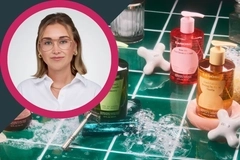
Beauty formulators must create SPF products with optimized spreadability, enhanced protection, and no white cast. Dr Daphne Benderly, director of R&D at Presperse, tells us about their SPF boosters and how they target these demands. She says that as the category increasingly blends with skin care, hair care, and color cosmetics, ensuring active ingredients are compatible with UV filters remains challenging.

Perfect.

I am Mika Mankeys, and this morning I am joined by Daphne Benderley of Priestpurs.

Good morning, Daphne.

Good morning, and I hope you're having a good day today.

It's nice and sunny outside, sort of a little bit sprinkle of rain, but it's good to talk about sun care.

It's sunny on my side of the world at least.

So, I'm gonna jump right into my first question so long, which is What are the biggest challenges that brands face when creating high SPF mineral only sunscreens today?

OK, so I'll break that into two separate parts.

One is high SPF, like on its own, the more SPS you have, the more SPF filters you'll need, and those always have trade-offs, and that's regardless if you're using mineral sunscreens, or organic.

Either way, there are, there are trade-offs that the formulator has to know how to mitigate and still make a sunscreen that people want to use, right?

After all, the best sunscreen is one that you'll use, and that's The formula's job to make it something that people will enjoy, and not just say, oh, I have to use sunscreen because I'm going outside.

When you have a mineral-only sunscreen, then some formulating challenges, there are a lot of powders you have to put in there with the minerals, those can affect the way the product feels.

It can make, it can increase the opacity, so you get that white cast on skin.

The old lifeguard days where they had those, you know, brightly colored because you couldn't make something that looks sheer on skin back then.

Technology has improved a lot since then.

But that's one of the challenges with minerals is to make something that will look clear on skin.

All right, OK, you recently or Prespers recently, formulated cosmetic powders, for SPF boosters or as SPS boosters.

Can you tell me a little bit about them and what makes them unique or how they work?

So at Prospers, we've had a project for the past, close to 15 years, looking at how powders can work at SPF boosters.

And anytime we, we introduce a new powder, that's one of the things we look for.

Can we also position it and, show effectiveness as an SPF booster?

The way these powders work is they basically reflects the light, right?

Because sun, even UV, that's, that's light, , so that the UV filter can work harder.

So if you can imagine, right, the sunscreen's there to, you know, get, get in the way of the sun, , of the UV reaching the skin.

It will absorb the light so that we're not seeing that, effect on skin.

These powders, if they can reflect the light back to a UV filter, were effectively making a thicker layer on skin.

In terms of performance, and that's why we're seeing that SPF boost.

So we look at, I said, almost every, we look at every powder we take on, and that way we can also talk about how formulators can choose.

Do you want a high or low oil absorption?

What is the kind of feel that you like to have for this powder?

Many of these powders also offer soft focus properties.

So if you're looking for a crossover some, sun care skincare, for example, where you want to talk about wrinkle blurring, you would choose a powder that can also give you soft focus properties.

All right.

So in addition to the, to the UV protection, how do they improve the, the texture and the appearance of sunscreens?

The boosters, boosters, these powders are, are many of them they're, they're spherical powders, and those have been used, in color cosmetics for for texture modifiers as slip.

They've been used in lotions for the same, you know, same reason, improving spreadability.

Oil absorption, if something feels too tacky, then a powder can help reduce that feel of tackiness.

So all that comes into play when a formulators designing a sunscreen, and which of these powders best matches with the sunscreen that they're, formulating.

Right.

You mentioned earlier about the, the white cast that sunscreens form, commonly, or at least that that is a, a consumer pain point.

How effective are your boosters at, at addressing this?

So they're very effective in that you can put a, you can add a booster at a low level, and sometimes what our research has shown, sometimes less is more.

If you add too much of a booster, then, you won't get the effect you need, so you, you really don't need, you're working up a 1 to 3% loading.

The moment you add a booster, you can either hit a higher SPF or you can reduce the amount of SPF filter that you need to use.

So that's inherently improving the, the appearance of skin.

Another trend that we've been seeing is formulators, being asked to work with only zinc oxide, not , not even titanium dioxide.

The zinc oxide is also inherently, has less white casting than the, the TIO2, titanium dioxide.

So here if we can use our boosters, and that's what we've demonstrated, article recently published, you can use that with, those are effective with zinc oxide.

And so overall, like we're using a SPF filter that has less white casting and we're boosting its performance so that you don't need as high a level.

Is there anything that you would like to highlight with regards to technological breakthroughs or new research insights that you find especially interesting or that you are particularly excited about with regards to mineral sunscreen innovation?

I guess, first thing I wanted to say is, especially in the US, the sunscreens are regulated as drugs, so we do have our toolbox and running filters, and that's what the formulators have to work with.

But important to remember it's like the, Great British Baking Show, right?

Everyone gets the same set of ingredients, but the end result is very, very different, right, depending on just whatever tips and tricks and how they put it together.

So that's the first thing, right?

We have our set of UV mineral filters.

But after that, the creativity of the formulators is, you know, they can see whatever else they want to put, for the innovation.

So there's a lot of interest in, first of all, different textures like K beauty, lighter formats, and that is a challenge for formulators, especially for these mineral sunscreens because they're heavier, right?

So that's, that's something that they'll be working on.

A lot of crossover between, you know, we've talked about skincare and sun care, also skincare and then color cosmetics.

That's where some of that white casting comes through or the graying, and so research going on to which pigments will get you a better, a more natural-looking shade and we'll get you that kind of graying that you'll see with titanium dioxide.

Mhm.

Also crossing into hair care.

So a lot of multi-functional, products I believe will be coming out.

And that's where part of another challenge will be when you have these actives that you're going to be using for skincare, for hair care.

Are they compatible with those mineral UV filters and just, and something else for the formulators to look out for when they're looking at what's in their toolbox.

Titanium dioxide, for example, can be, , the stability, there stability issues if you combine it with the wrong actives.

So that's what we'd be looking, or, you know, that's what the developer would be looking for.

Is it stable over time?

Does it, does it maintain its SPF over time?

And that's something that would be caught before it would ever get launched, right?

That's, at that point, right?

They'd go back and, and, restart the development cycle, because that would be caught in stability testing.

All right, OK, perfect.

You mentioned earlier a little bit about the greasiness or the, the tackiness of a, of a, of a, the texture.

That's obviously a, a large pain point for consumers.

So my question is, how do you balance boosting SPF performance while maintaining a lightweight feel in the final product, especially as it, you know, as it kind of morphs into the skincare or the color cosmetics industry.

So greasiness and tackiness is more often associated with the organic sunscreens, but the answer is the same.

You can choose the powders based on or take powders with the right oil absorption.

So if you want to mitigate some of that tackiness, you would go with a powder with a higher oil absorption.

If your breath, you know, your balance is great, then you don't need that.

You'd go for, you'd, you'd choose something.

With the lower mid-range, oil absorption, that's a very technical explanation, I guess, but that's part of what the formula would look, you know, they, they'd feel it, put a little bit in the formula, see how it affects the texture that they want, and that's part of the reason that, at Pres we've been working on testing so many of our powders in that , that we offer a range.

So sometimes there's something as subtle as I prefer this field, this really feels great.

And that will, it's right, no right or wrong, you could have two formulators picking a different powders cause that hits exactly the kind of feel that they're aiming for.

All right.

OK.

So my last question for you is, looking ahead, how do you see the future of suncare kind of evolving over the next few years?

What is something that you expect to see?

I expect the trends to continue and crossover between sun care and, and other, you know, other tra traditional categories like, skincare, color cosmetics, hair care, and inside, it's, it's great to see that people are interested in sun protection and recognize the need for that.

And as that awareness of sun safety grows, then there will be also continuing demand for protection in, in other categories and not just beach and not just, you know, going out for a, for a summer day.

So I expect that's gonna continue to grow, to look for lighter textures.

I think we'll also be continuing, Ease of use, is that, is, is, people wanna use more screens, they wanna make it easier to use, right, TSA friendly, of course, will be a big thing, especially in the US, something that you can easily carry with you when you're going and traveling.

Again, it doesn't have to be on vacation, right?

Someone going for a business trip but still wants to get in, an evening walk and whatever beautiful city they're visiting, right?

They're still going to need that, you know, that, SPF protection.

So I think that's formats, texture, lighter feel, and crossover in different categories.

All right, perfect.

Beautiful.

Thank you.

Those are all of my questions.

All right, thank you very much for having me on.

More videos

Image