


CeraVe survey exposes skin care’s complexity problem


Key takeaways
- CeraVe’s survey of 6,000 European adults finds 81% value protection beyond UV, but only 22% use skin barrier products.
- More than half of respondents say they will not follow a skin care routine unless it is simple.
- The gap points to demand for simple, multifunctional, and climate-adaptive barrier care.

CeraVe has revealed a gap between consumers’ awareness of the skin barrier and their actions taken to protect it. The research examined how people understand the skin barrier and respond to environmental stressors, showing where brands can innovate to cover industry whitespace.
Almost all (90%) of adults surveyed said they are concerned about at least one environmental factor affecting their skin. Nearly half (47%) said their skin is more sensitive than it was five years ago, and 50% report dryness linked to their environment or changing weather.
However, only 10% reported taking additional skin care steps when pollution levels are high.
“People may experience dryness, tightness, or sensitivity without realizing these can be linked to the skin barrier. While awareness matters, clear and trusted guidance is the most important factor,” says Dr. Andrew Park, board-certified dermatologist.
CeraVe surveyed 6,000 adults across the UK, France, Germany, Italy, and Spain. The research was unveiled during the European Academy of Dermatology and Venereology (EADV) Congress in Vienna (September 30–October 3).
The findings point to an opening for brands and formulators. The reported gap signals an untapped market for simple, multifunctional barrier care, since most consumers recognize environmental threats to their skin, but few use products designed to address them.
Awareness outpaces action
Most of (81%) CeraVe’s respondents said they recognize the importance of protection beyond UV exposure, but only 22% use products specifically intended to support the skin barrier.
One reason for the disparity between knowledge and action could be beauty option paralysis caused by an increasingly crowded industry. In the review of the survey’s results, CeraVe asked the question: “Is skin care getting too complicated?”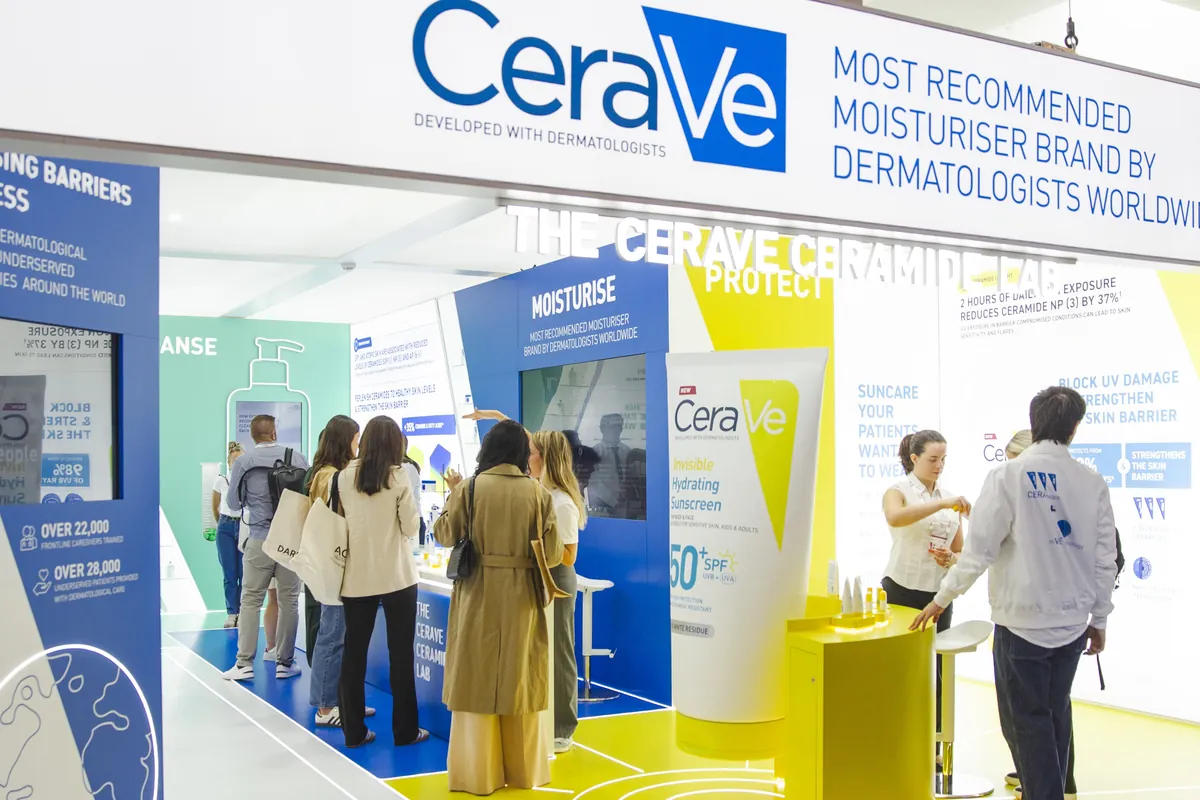 Most consumers worry about environmental stress on their skin.
Over half (55%) of responders said skin care must be simple, or they will not follow the routine. This answer ties into the recent rise of “skinimalism” that Personal Care Insights has reported on.
Melt&Marble, Algiecel, and Untapped Innovation recently told us that consumers’ core demands are coming from cosmetic minimalism, or “skinimalism.”
The rise of minimalistic skin care can be attributed to the influx of beauty offerings over the past few years. This is what leads CeraVe to raise the question of whether the industry is too convoluted and, therefore, consumers are unsure of how to react.
Supporting this, Revieve, a beauty technology company, previously found that 72% of consumers report being “overwhelmed by the volume of new product launches across beauty categories, with younger consumers reporting the highest levels of decision fatigue.”
As an avenue to address the overwhelming beauty space, Sephora previously launched a campaign, Skin Obsessed, to position itself as a destination for consumers seeking clarity and support in an increasingly crowded skin care market.
Barrier care momentum
Gene Colon, global senior VP of Medical Relations and Communications at CeraVe, says that CeraVe’s new research shows that people are paying closer attention to their skin. However, he notes that greater awareness also brings a greater need for clarity and trust.
“Our responsibility is to make skin health understandable and accessible, while never compromising on safety and efficacy. As the conversation around skin becomes increasingly complex, we want to give people something simple: credible science, effective skin care, and the confidence to make informed choices for their skin,” explains Colon.
The skin care brand says it combined dermatology, scientific, and brand perspectives to explore the need for clearer skin-barrier education and the science behind safe, efficacious skin care.
The research comes as barrier-focused dermocosmetics drive growth for CeraVe’s parent company. L’Oréal’s Dermatological Beauty division grew 10.6% on an adjusted like-for-like basis in the first half of 2026, with CeraVe advancing in double digits, helped by its expansion into ceramide-based sun care.
Competitors are investing in the same space. Also at the EADV Congress, Neutrogena and Aveeno showed research findings on skin solutions that provided barrier support. Aveeno’s new research demonstrated how colloidal oat can bolster skin barrier integrity and recovery after UV exposure.  Crowded beauty shelves leave many shoppers overwhelmed.
According to Innova Market Insights, consumers increasingly look for barrier-repair benefits when choosing moisturizers. The market researcher has reported that from 2021 to 2025, personal care launches with microbiome-related claims grew by an average of 33% annually. While most of this activity has been in skin care, other categories, such as hair care, are rapidly stepping up innovation in this space.
Climate-adaptive care
CeraVe’s findings also tie into the growing awareness of the skin exposome — the sum of external factors that affect the skin over a lifetime, including pollution, UV radiation, climate, and weather shifts.
Myriam Abderrachid, head of global marketing Personal Care at Gattefossé, previously told Personal Care Insights that an increased awareness of the exposome is pushing the need for actives that help the skin adapt and recover under real‑life conditions.
“This is closely linked to the emergence of climate‑adaptive beauty, where formulations are designed to maintain barrier balance despite environmental fluctuations, helping the skin better resist rapid temperature changes while preserving comfort and hydration,” she said.
Barrier care formulations typically address environmental damage with ceramides, which replenish the skin’s natural lipids, and niacinamide, which supports the skin’s own ceramide production. Formulators are also turning to antioxidants to counter pollution-induced oxidative stress and to prebiotic and postbiotic actives that help maintain a balanced skin microbiome.
At In-cosmetics Global 2026, we spoke with Laurie Canel, product marketing leader of Active Ingredients at Gattefossé, about Silkaress, a silk-inspired active designed to help skin adapt to changing environmental conditions. She told us there is a growing consumer demand for adaptive skin care solutions, and brands are urged to formulate products for the visible impact of climate change on skin health.
Innova Market Insights data also indicates that there has been a 4% CAGR in personal care launches with anti-pollution claims from 2020 to 2024, with Europe accounting for half of these releases.