


Beauty’s next whitespace: What brands can capture before market saturation


Key takeaways
- Cross-platform signals reveal early beauty whitespace, where curiosity is high, and brand ownership remains low.
- Face-to-scalp, “skin-logic,” and red light therapy hats highlight prevention-led, routine-ready innovation opportunities.
- DIY-driven trends like strawberry face masks are growing rapidly, with minimal competition and strong search momentum.
Spate has uncovered the early signals and prospects emerging across Google Search and TikTok that beauty brands can capitalize on. The 2026 Whitespace Opportunities report reveals that consumers are using these online platforms to discover, validate, and decide which strategies, products, and ingredients will help them feel — and look — their best.
Some of the fast-growing highlights include users seeking information on applying “skin-logic” across the face–scalp boundary and increased interest in red light therapy hats.
Spate’s insights are offering beauty brands and suppliers seeds of wisdom to help them develop products that appeal to today’s beauty shoppers.
Personal Care Insights speaks with Jenny Zeng, beauty insights analyst at Spate. She says: “This report is designed to help brands spot where attention is rising, understand what’s driving it, and decide where to focus first while competition remains low to medium. The advantage is not chasing novelty; it is owning the language and routine role early, while competition is still low to medium.”
Making the best beauty choices
According to Spate, what starts as a simple query or a niche video format online can scale quickly once the language becomes repeatable and the use-case — or how consumers interact with a concept — becomes clear.
The report surfaces fast-growing trends with low-to-medium competition and organizes them into clear opportunity zones brands can act on. It also highlights where consumer interest is accelerating, how behaviors differ across platforms, and where brand ownership is still forming.
Across categories, the same pattern appears: consumers reward solutions that reduce effort, feel routine-ready, and translate across platforms.
As the growth topics show — scalp acne, sensitive scalp, and scalp sunscreen — consumers are now using facial skincare frameworks for scalp concerns.Zeng, who created the report, believes that beauty brands can use cross-platform growth as an early warning system, then move fast on the parts that shape discovery, naming, and conversion.
“Skin-logic”
According to Zeng, the clearest whitespace appears where consumers are borrowing familiar frameworks and applying them in new places. She exemplifies the face-to-scalp boundary, which encompasses breakout, sensitivity, and sun protection needs across both platforms.
The growing topics point to a shared “skin-logic” across the face–scalp boundary. This shared logic creates whitespace for brands to win in the “face–scalp boundary” by applying proven facial positioning and education to scalp routines, without changing the core assortment.
“For example, in scalp acne, TikTok indicators show limited commercial saturation, with very low paid views share and low TikTok Shop share, plus consumers seeking professional guidance through hashtags like #dermapproved. That combination tells brands where education, credibility cues, and clear solutions can win early,” says Zeng.
Scalp acne is currently at medium popularity, meaning it has reached medium awareness across Google Search, TikTok, and Instagram. Spate’s Popularity Index aggregates activity across these three platforms into a single view of overall awareness, showing both the scale of the trend and where attention is concentrated. In this case, most demand is on Google Search, suggesting consumers are actively researching causes and solutions, while TikTok is contributing to awareness through educational content.
According to Spate, on Google Search, scalp acne is still largely researched in generic, solution-seeking language (i.e., “treatment,” “shampoo”), suggesting consumers are early in the journey and looking for guidance.
The related searches point to how they want to solve it. They’re anchoring on familiar hair care formats — shampoo, scalp treatment, conditioner — while linking scalp acne to adjacent needs like oiliness and thinning hair. With very low competition and minimal brand association, the space is still open for brands to shape the way scalp acne is defined and treated within a routine.
Red light therapy hat: A curiosity-led market?
Zeng observes that brands and suppliers can use rising topics to build a simple playbook: clarify what the trend is, prove how it works, and assign it a routine job. Red light therapy hat is a smaller trend with fast growth, especially on Google Search, signaling consumers are actively researching it.
“That is especially important when a search is still curiosity-led, and people are not yet attaching benefits, concerns, or brands to the query. In the report’s fast growers, ‘red light therapy hat’ is a good example of this early stage, where Google searches are largely just the term itself, signaling a need for fast, basic understanding,” she says.
On Google Search, according to Spate’s report, interest is mostly curiosity-driven, with consumers searching for “red light therapy hat” to learn more.
Compared to an LED hair helmet, which already shows medium competition, red light therapy hat appears to be at an earlier stage with more whitespace and less brand association, the report reveals.
We recently spoke with Joylux on the myths behind red light therapy.
Analyzing the “fast-growers”
The Spate report highlights early-stage whitespace where curiosity is high but brand attachment is low.
“First, it’s important to look for consistent year-on-year growth paired with low ownership signals, meaning low competition and limited brand association,” says Zeng.
“Second, users should prioritize formats that ‘encode the outcome,’ because they reduce effort and uncertainty for the consumer, which makes adoption faster. The report highlights guided formats and at-home devices as a consistent pattern across smaller trends.”
“Third, choose trends where you can supply the missing structure, clear use-case language, and an easy path from entry to routine. The report frames this as turning the format into a hero entry point, then laddering into routine-building,” she explains.
When asked what steps beauty brands should take to differentiate themselves, Zeng says the market remains open, highlighting the importance of differentiation: “by owning the decision frame, not by adding noise.”
In prevention-led demand, the report shows consumers increasingly organizing around long-horizon maintenance. This creates space for brands to connect ingredient families to outcomes that travel across skin and hair.
In format-led demand, the report points to outcome-led discovery, where shoppers self-select quickly because the reason for use is obvious and the result feels reliable.
“Practically, that means tightening naming, marketing language, on-shelf signposting, and creator briefs around the shortest path to ‘what it does’ and ‘when to use it,’ especially in spaces where consumers are still learning, and brands are not yet consistently present,” explains Zeng.
Trend spotlight
One small trend with fast-growing potential, driven almost entirely by rising Google Search interest, is “strawberry face mask.”
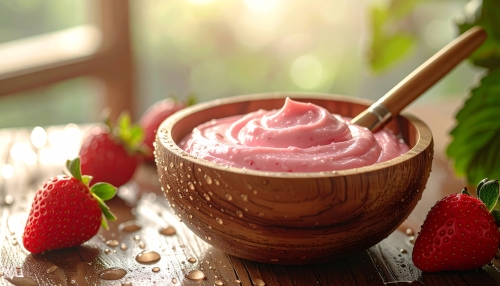 Google and TikTok point to DIY curiosity around using strawberries as a natural face mask. According to Spate, the strawberry face mask still has very low competition on Google Search, with minimal brand association in top queries. Related searches point to a “kitchen beauty” angle, with consumers pairing strawberry with familiar add-ons like aloe vera and honey, while “peel off” emerges as a specific format interest.
The search behavior could reflect purchase intent as consumers look for options to try. At the same time, both Google and TikTok also point to DIY curiosity around using strawberries as a natural face mask. Low-paid views (3.8%) and a modest TikTok Shop share (4.7%) suggest the trend is still driven more by experimentation and virality than brand-led selling, reinforced by hashtags like #diyfacemask.
Spate reveals that Freeman is one of the few brands showing up in this realm, suggesting the domain is still new and largely driven by consumers exploring recipes and options rather than brand-led demand.