



Uniting for sun safety: Industry pushes for daily SPF use as adoption lags

Key takeaways
- The personal care industry is moving toward sunscreen being viewed as a daily essential for everyone, not just for beach days.
- The #WearSunscreen campaign aims to increase awareness and adoption of sun protection.
- Improved sun care textures and sensory experiences are crucial to boosting SPF usage.
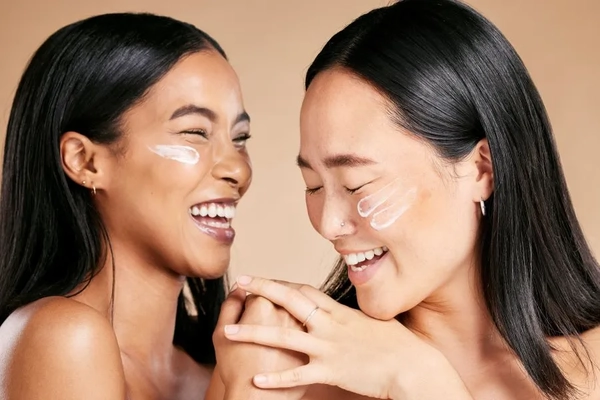
Multiple organizations have engaged in a cross-industry effort to promote daily sun protection as a critical public health priority. The groups across the personal care products and consumer health care sectors are aligning behind a single message: sunscreen is an everyday essential for protecting skin health and reducing the risk of skin cancer.
Trends in the beauty sector signal a shift toward SPF being seen as a must-have product, with more consumers integrating it into their daily routines, not just as a beach day pick-up. For example, last week Spate told us that marketing sun care as a daily cosmetic, rather than a seasonal one, is where the industry should be headed.
However, the new #WearSunscreen campaign signals that the trend is not widespread enough to eliminate its need. According to the Skin Cancer Foundation, fewer than 14% of Americans report daily sunscreen use. The campaign aims to increase that percentage.
In honor of World Health Day, on April 7, the Personal Care Products Council (PCPC) has collaborated with the Consumer Healthcare Products Association and its Health In Hand Foundation, with support from the Melanoma Research Foundation and the Skin Cancer Foundation.
Need for sun care education
Skin cancer is the most common cancer in the US. Each year, over five million Americans are diagnosed with skin cancer — more than all other cancers combined.
Despite rising consumer awareness around the importance of sun protection and an industry push to create more favorable sun care textures, certain demographics are still slow to adopt proper practices.
Last year, the American Academy of Dermatology (AAD) found that 96% of Americans believe sun protection is important, but 67% of Americans got tanner in 2024, up from 54% in 2020. Additionally, 35% were sunburned, up from 25% in 2020, including nearly 50% of Gen Z and millennials.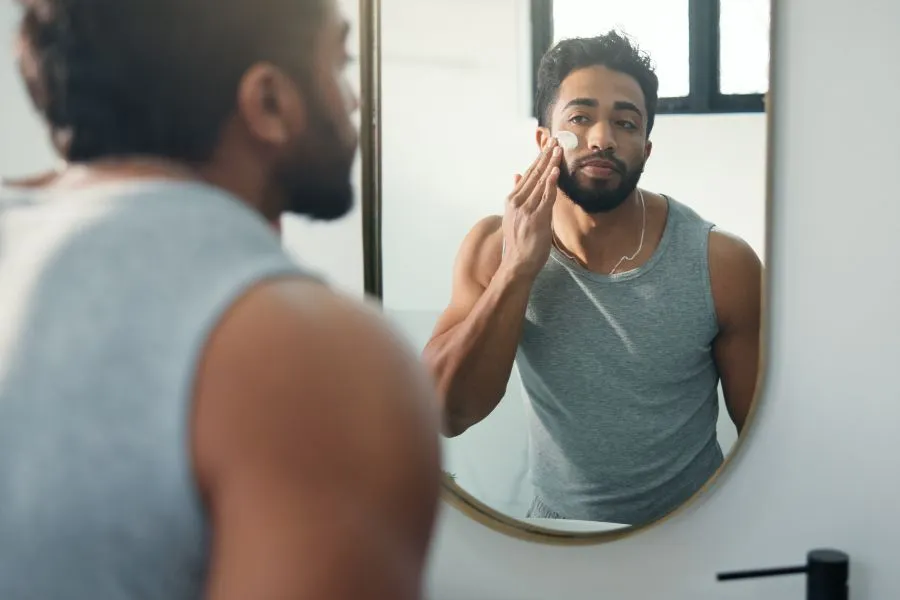 Sun care textures are evolving for better daily use.
The AAD has also reported that Gen Z adults, ages 18–26, are at risk for skin cancer due to increasing rates of tanning and burning. According to the national survey, 52% of Gen Z adults were unaware of one or more sunburn risks, such as increased risk of developing skin cancer or premature skin aging. While over 50% of Americans get a grade of A or B for sun protection knowledge, 32% of Gen Z adults receive a failing grade of D or F, reports the AAD.
Innova Market Insights data reports that while sun protection remains the most frequently launched subcategory for sun care, there has been a notable rise in self-tanning and bronzer product launches, offering consumers alternatives to traditional sunbathing.
A reason for the knowledge lack among young consumers can be attributed to the rise of misinformation on social media surrounding sun care. Last year, the Skin Cancer Foundation Photobiology warned of misinformation about sun protection circulating on social media and growing rates of skin cancer in the US.
Anna Chien, an associate professor of dermatology at Johns Hopkins University School of Medicine, US, and a member of the Skin Cancer Foundation’s Photobiology Committee, told us that new recommendations are crucial as people’s sun exposure increases and anti-SPF misinformation spreads on social media, encouraging young people to skip sunscreen.
Against this landscape, the #WearSunscreen campaign aims to increase public awareness by sharing facts, free resources, and expert advice. The partners are working to provide tools and information that make it easier for consumers to incorporate sun protection into their daily routines.
For example, the collaborators underline that melanoma is the deadliest form of skin cancer and is also one of the most preventable. Approximately 20 Americans die from melanoma every day, and it is estimated that 8,510 deaths will be attributed to the disease in 2026.
“While melanoma is the deadliest form of skin cancer, the most common cancer in the US, over 90% of melanomas are considered preventable and, when detected early, are highly treatable. “Embracing sun safe behaviors such as the daily use of sunscreen, agnostic of ethnicity, gender, age, and race, is critical to decreasing the risk of melanoma incidence,” says James Merrick, chief communications and marketing officer, the Melanoma Research Foundation.
By reaching consumers across industry, health care, and community channels, the campaign encourages people to protect their skin every day, regardless of season, weather, or skin tone.
“We are pleased to represent the melanoma patient and survivor community and join the collaborative #WearSunscreen campaign to help educate all about the harmful effects of UV rays and amplify the importance of melanoma prevention,” says Merrick.
By aligning resources across organizations, the campaign seeks to raise awareness and to drive lasting sun-safe behaviors at scale.  The #WearSunscreen campaign raises sun protection awareness.
In a monumental move last year, recognizing the importance of sun care — beyond the personal care industry — the World Health Organization added sunscreen to its Model List of Essential Medicines, officially recognizing it as a necessary tool for global health.
The move shifted sunscreen from being classified as a cosmetic to being acknowledged as a preventive medicine, with the potential to improve access and reduce UV-related diseases worldwide.
FDA-approved sun care availability
The #WearSunscreen campaign partners detail that US FDA-regulated sunscreens — whether mineral or non-mineral — are proven to help prevent sunburn, premature skin aging, and skin cancer when used as directed. They say that consumers can choose from a wide range of formulations designed to meet diverse needs, all supported by rigorous scientific evaluation and oversight.
Despite the options available, the US FDA has faced scrutiny for not approving new sunscreen ingredients since 1999. In December of last year, the FDA proposed expanding its list of active ingredients for use in sunscreen for the first time in almost three decades.
The government agency is adding bemotrizinol in an effort to advance sunscreen innovation. If finalized, bemotrizinol will be recognized as a safe sunscreen active ingredient for adults and children above six months old.
The move followed regulatory pressure from US lawmakers who, earlier that year, introduced a bill to reform how the FDA evaluates and approves over-the-counter (OTC) sun protection. The SAFE Sunscreen Standards Act aims to increase the availability of sunscreen options in the US to align with global standards.
The US lacks many of the sun protection options already available in other countries. At the time, Representative John Joyce said that scientific advances in photoprotection cannot “continue to be stalled by outdated regulatory processes.”
“A robust body of peer-reviewed research has consistently demonstrated that sunscreen is highly effective in helping protect people of all ages, backgrounds, and skin tones from skin cancer,” says Tom Myers, president and CEO of the PCPC.
“Building on this research, PCPC remains firmly committed to encouraging the proper, consistent use of sunscreen as a critical component of daily skin care routines. It is essential that people have access to safe, effective, and innovative sunscreen products — paired with clear, science-based information — to make informed decisions about their skin health.”
In a similar move to the #WearSunscreen campaign, last year The British Beauty Council launched a cross-industry UV Safety Initiative to promote sun protection awareness, improve SPF education, and increase access to protective products. The initiative also aimed to influence government policy on UV safety.
The campaign was touted as the first coordinated industry effort to address rising melanoma rates and widespread gaps in public understanding of sun care. The initiative was backed by major companies and retailers such as L’Oréal Groupe, Boots, and Lookfantastic.
What consumers want
Innova Market Insights data indicates that, globally, the sun care category has grown 8% from April 2020 to March 2025. However, a commonly cited barrier to daily adoption of SPF products is their texture. This has led formulators to turn their attention to creating pleasant sensory profiles.
“High SPF formulas tend to feel thick or leave a white cast, especially with mineral filters like zinc oxide. To address this, formulators must carefully select emulsifiers and sensorial agents to create a pleasant texture without sacrificing performance. This may involve using new elastomer gels or biodegradable powders,” Kevin Hedou, technical sales manager at Brenntag, previously told Personal Care Insights.
Consumers now expect sun care products to offer the same sensory experience as skin care, aligning with the “skinification” trend, where personal care items adopt benefits traditionally associated with skin care.
Symrise previously told us that “texture preferences continue to shift toward dewy finishes and invisible protection as part of daily wear,” reflecting the demand for SPF products that double as makeup primers or glow-enhancers.
Additionally, Spate’s US sun care report recently revealed that brands that treat SPF like sunscreen are losing competitiveness against brands that treat it like skin care.  Sunscreen is increasingly regarded as a vital tool for global health.
“Consumers are no longer willing to tolerate a product that feels like sunscreen. The new benchmark is a formula that disappears into the skin, plays well with makeup, and delivers some kind of cosmetic payoff, whether that’s a glow, a blurring effect, or a natural finish. The fastest-growing benefit searches in the category are almost entirely sensorial or cosmetic — protection is assumed, everything else is the differentiator,” Jenny Zeng, beauty insights analyst at Spate, told Personal Care Insights.
In response, beauty industry players are creating new formulations and advanced delivery systems to meet evolving consumer demands for enhanced texture, efficacy, and sensory appeal.
Earlier this year, Shiseido developed a novel mist-type sun care product using Voyager, its AI-powered digital formulations platform. The technology uses proprietary algorithms and a large database to compile over half a million data points, which then inform the company’s formulation development.
Meanwhile, ASTech, a company specializing in UV filter ingredients for sun protection, and dsm-firmenich signed a memorandum of understanding for strategic business cooperation. The two companies agreed to partner to strengthen competitiveness in the global sunscreen market.
Unified effort to drive sun safety
Consumers are increasingly integrating SPF into their daily routines, but not at high enough rates where organizations see the impact on health outcomes. The industry is working to create better sensory experiences to increase adoption, and organizations are creating unified efforts to make sunscreen a daily self-care priority.
Using the hashtag #WearSunscreen, consumers are encouraged to share their sun safety habits. The campaign partners hope this will highlight why sunscreen matters and encourage others to take simple steps to protect their skin.
“This campaign reflects a shared commitment across a variety of stakeholders to make sun safety a daily habit,” says Scott Melville, president and CEO of the Consumer Healthcare Products Association.
The collaborative effort brings aligned voices across the self-care and personal care ecosystem, from product manufacturers to public health educators, to reinforce one message: daily sunscreen use saves lives. The campaign is strengthened by voices of lived experience, including skin cancer survivors and advocates sharing personal stories, alongside outreach to policymakers to help elevate sun safety as a national prevention priority.
“By working collectively, we can more effectively empower consumers with clear, consistent information and help ensure they have the knowledge and confidence to protect their skin health,” adds Melville.