




Call for closeness: ELF dials up transparency as trust drives brand loyalty
Key takeaways
- ELF has launched a CEO hotline alongside its fifth impact report and first standalone Sustainability Update.
- The campaign asked consumers which causes matter most to them.
- The moves reflect a wider industry shift toward transparency and consumer trust.

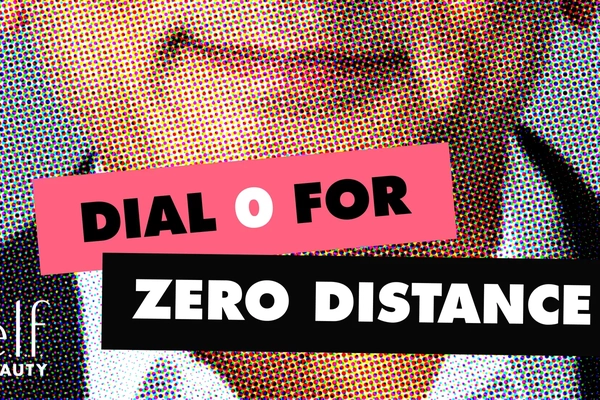
ELF Beauty is offering its customers a direct line to the company’s CEO. The Dial 0 for Zero Distance campaign brings communication between brands and consumers into a new playing field.
The open line came in tandem with the company’s fifth annual Impact Report for fiscal year 2026 and its first standalone Sustainability Update.
"This impact report is Zero Distance in action. We want to spark conversations, awareness, and more importantly, meaningful action,” CEO and chairman Tarang Amin tells Personal Care Insights.
All the releases further ELF’s community-centered ethos and are representative of a larger industry play toward brand transparency.
Consumers are increasingly demanding transparency from beauty brands, and they are using their dollars to get it. According to a report by VML, 87% of customers are willing to pay more for products from brands they trust. Therefore, campaign and report launches such as ELF’s, while right now may seem like a bold move, are indicative of a wider industry movement toward openness as the norm.
Beauty communities want access to the people making brand decisions, an opinion on the causes they support, and evidence of progress that reaches suppliers, workers, and the environment. This increased search for a say can be traced back to the increasingly digital landscape the beauty industry operates in. It creates more opportunities for connection between brands and consumers — inevitably generating an air of closeness between the two.
ELF opening a direct line to the CEO, releasing impact reports, and inaugurating a standalone Sustainability Update portray a company leaning into a more personal rapport to satisfy consumers’ craving for more interactive channels.
“One of the things I have learned is that there’s always more to learn and more we can do. That is why Zero Distance is so important to us,” Amin tells us.
Customers call the CEO
In the internet age, consumers can tell brands what they want instantly and expect a fast response. This has changed the relationship between beauty brands and their customers. Dial 0 for Zero Distance suggests that ELF wants to be even closer to its community.
Most brands handle consumer interaction through social media teams and customer service channels. ELF’s hotline takes it to the top of the company, suggesting that for some companies, listening is becoming a leadership responsibility rather than only a marketing one. ELF invites consumers to call its CEO directly.
The campaign invited consumers to reach its CEO in several ways: the hotline, a call-in session, and a town hall.
The call-in line came with a tap-to-dial online option, letting consumers hear from Amin about ELF’s purpose platform and leave a voicemail with feedback on the impact report and the causes they care about.
On November 13, Amin held a three-hour live call-in session for one-to-one conversations with ELF’s community.
On November 19, the company opened its town hall, usually reserved for employees, to the public on LinkedIn and Twitch. The town hall followed its usual format, opening with an inspirational quote, group stretching, and breathwork. Then, Amin, leaders from the impact and sustainability teams, and purpose partners presented the report.
ELF has also built the Zero Distance philosophy into its formal reporting. Its Sustainability Update lists stakeholder engagement among its material topics. The company says its materiality assessment draws on surveys and conversations with consumers, employees, investors, and retailers.
The digital channels ELF employs for campaigns such as Dial 0 also have an environmental footprint. ELF describes itself as a digitally native company and says much of its marketing-related emissions come from digital media and the online platforms where its content is viewed.
The company calls the area one of growing significance for the industry and says it is exploring more energy-efficient digital practices.
Causes beyond the product
Beauty consumers increasingly want the brands they buy from to do good beyond the products they sell. ELF made that the focus of its call-in campaign, asking callers to identify which causes matter to them. Amin presents six options on the phone: women’s health, fair and ethical business, empowering the next generation, women and girls in sports, diverse representation and leadership, and survivor rights and advocacy.
The new impact report expands on how the company supports these issues.
Women’s health is prominently featured in the 2026 report. The Rhode Futures Fund, linked to the brand founded by Hailey Bieber and acquired by ELF in August 2025, has committed US$5 million over three years to the Foundation for Women’s Health. The company describes women’s health as a historically underfunded area.
Fair trade is also central to how ELF presents its ethics. In the Impact Report, ELF says it was the first beauty company with Fair Trade Certified manufacturing facilities, and that its Fair Trade community funds reached over 1,600 people in FY26.
ELF’s Sustainability Update goes further, reporting that 74% of its brands’ product units (covering more than 900 SKUs) were made in Fair Trade Certified third-party manufacturing in FY26. That share fell from 85% in FY24 after the Naturium acquisition. The company says the decrease reflects a more geographically diverse sourcing footprint rather than a weaker commitment, and that the figure for its Asia sourcing region was 84%.
According to the update, the community funds also paid for programs at supplier facilities that included educational sessions on women’s health. 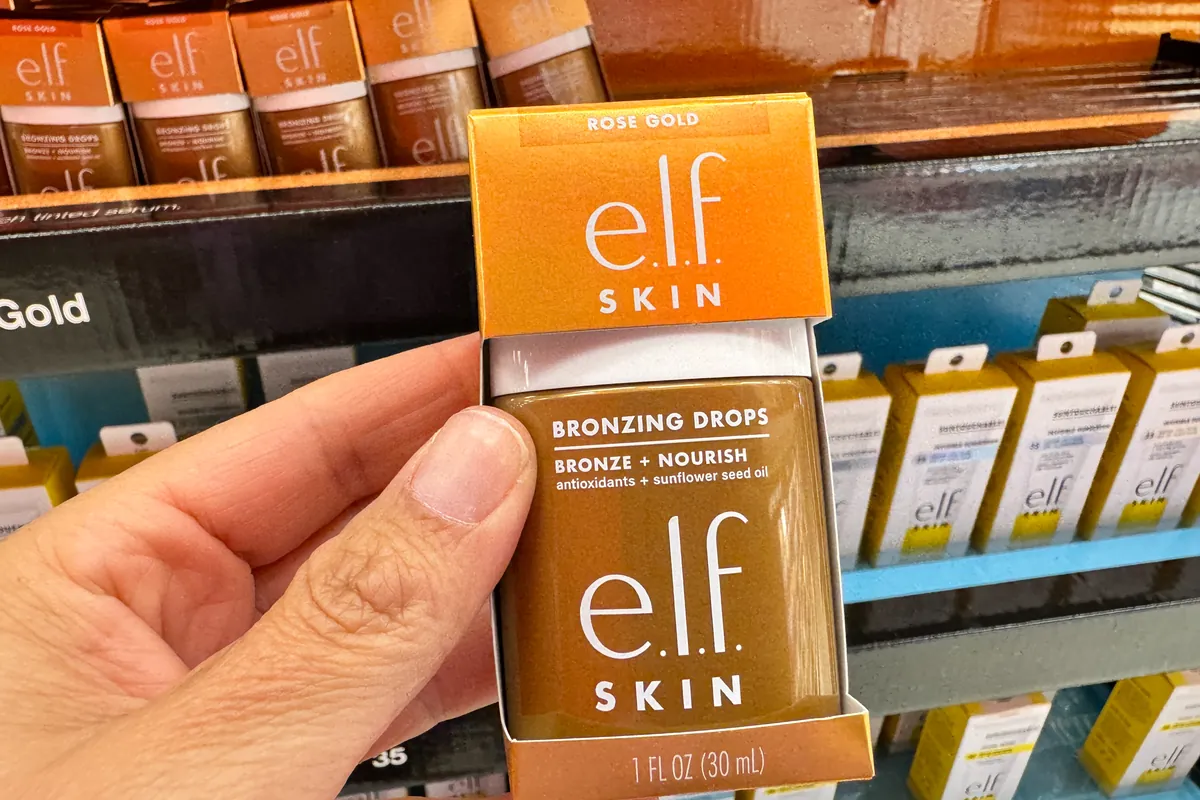 ELF wants half its suppliers’ power to come from clean sources by FY32.
To “empower the next generation,” ELF has partnered with Rivet, a nonprofit supporting youth-led social change, on the Zero Limits program. The program aims to help 100 young “changemakers” across the UK and India turn their ideas into community projects in its first phase.
On women and girls in sports, a report ELF produced with women’s sports consultancy Parity found that women who played sports growing up are nearly 50% more likely to hold leadership roles at work.
Meanwhile, ELF’s Change the Board Game initiative aims to bring more women and people of color onto US public company boards, tapping into “diverse representation and leadership.”
The company says its board places it among the top 1% of US public companies for diversity. It adds that over 500 organizations and individuals have joined its coalition, and that 58% of graduates of the board-readiness program it supports with the National Association of Corporate Directors have been placed on boards.
Lastly, survivor rights and advocacy run through ELF’s partnership with activist and astronaut Amanda Nguyen, which began in January 2025. The partnership with Nguyen started with an episode of ELF’s film series Show Your(s)ELF, which tells Nguyen’s advocacy story. ELF has since supported her nonprofit Rise’s Survivor Fashion Show at New York Fashion Week. The show turns the question “What were you wearing?,” often put to sexual assault survivors, into a celebration of resilience.
ELF reports that it gives over 2% of net profits to causes its community cares about and more than US$4 million in FY26 across over 200 nonprofits.
“What makes ELF a different kind of company starts with our people and our community. We operate with Zero Distance, staying deeply connected with one another so we can make progress together to make the world a better place,” says Amin.
How ELF grows
The hotline launched shortly after ELF reported its second-quarter FY27 results, revealing the 31st consecutive quarter of net sales growth. Amin says that how much the company grows matters just as much as how it achieves growth.
The brand’s Sustainability Update, published as a standalone document for the first time, shows where growth and environmental footprint pull against each other.
In the report’s introduction, Ellen Leung, ELF Beauty’s VP of Sustainability & Transformation, says that the company is “motivated by the belief that thoughtful progress matters.”
“Building on our previous impact reports, this first edition of our Sustainability Update reflects our desire to provide additional insights and details regarding the environmental stewardship and responsible sourcing topics that are material to our business,” explains Leung.
The company reports that its total GHG emissions rose to 160,701 metric tons of CO2e in FY26, from 149,022 in FY25. ELF attributes the increase to business growth, mainly higher capital spending, including facility investments.
Emissions per dollar of revenue also rose year on year. However, the company reports that its FY26 revenue intensity was 18% lower than in FY24, and it cites this as evidence that growth is starting to decouple from emissions.  Consumers pay more for beauty brands they trust.
Growth has also changed ELF’s targets. The company set its Scope 1 and 2 reduction targets through the Science Based Targets initiative’s pathway for small and medium-sized enterprises. It has grown beyond that pathway’s eligibility limits and retired those targets in FY26. It says it continues to source 100% renewable electricity for its leased facilities.
Sharing cost of clean power
ELF’s main new environmental commitment is aimed at its suppliers. The company says electricity used by its manufacturing suppliers accounts for 12% of its total emissions footprint. It reports that clean electricity use among those suppliers rose from 6% in FY25 to 14% in FY26.
Suppliers credit the increase mainly to on-site solar and purchases of Energy Attribute Certificates (EACs).
Under its new Supplier Clean Electricity Program, ELF commits that third-party manufacturers will source clean electricity for 50% of the power used to make its brands’ products by the end of FY32.
To help pay for the transition, the company says that for every megawatt-hour of clean electricity a supplier sources for ELF production, it intends to buy and retire a matching EAC. The company also says it will prioritize on-site sources such as solar where possible, while accepting that certificates remain necessary where direct procurement is not yet available.
The program covers only electricity used to make products, not other production in the same factories. ELF’s definition of “clean” is broader than “renewable” — it includes nuclear but excludes natural gas.
The company’s jump from 6% to 14% in one year is the strongest gain so far. Reaching 50% will require similar progress to continue through the rest of the decade.
ELF also uses EcoVadis ratings to track its suppliers’ performance. The company reports that its 66 assessed suppliers scored 32% above the EcoVadis global average in FY26.