


Indonesia halal mandate hits cosmetics

Key takeaways
- Cosmetics sold in Indonesia must now be halal certified or labeled non-halal.
- BPJPH rules out postponement and raids while drafting special provisions for small businesses and imports.
- Draft SJPH guidelines set strict rules for ingredients, production, labeling, and oversight.
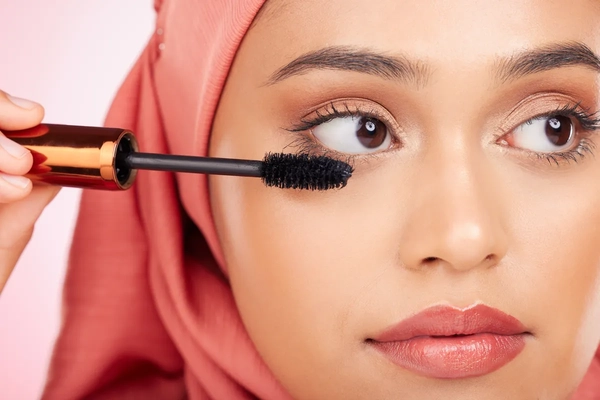
As of yesterday, all cosmetics in Indonesia must be halal certified or clearly marked as non-halal.
The government is making preparations to ensure the implementation of the mandatory halal requirement proceeds effectively, providing certainty for business operators and the public. The law aims to ensure that cosmetic products meet halal requirements in accordance with Islamic principles.
According to The State of the Global Islamic Economy 2023/24 Report by Salaam Gateway, Muslim consumer spending on cosmetics reached US$84 billion in 2022, up by 14.3% from US$74 billion in 2021, and is forecasted to reach US$129 billion by 2027 at a CAGR of 8.9%. The report also identified Indonesia and India as the top two largest markets by Muslim consumer spending on cosmetics.
Haikal Hasan, head of the Halal Product Assurance Organizing Agency (BPJPH), says that the implementation of the mandatory halal requirement — including the verification of the halal status of foreign products — does not constitute a restrictive trade measure, a limitation, or an act of coercion against business operators.
Instead, he explains that the policy aims to provide certainty and protection to the public, while simultaneously offering regulatory clarity for businesses.
Hasan also clarifies that there is no policy in place to conduct “sweeps” or similar enforcement actions against business operators in the field.
Supporting small brands
The Indonesian government is currently drafting specific provisions for certain circumstances — particularly concerning micro and small enterprises, as well as raw materials and consumer goods. This is done to ensure that the implementation of the mandatory halal requirement safeguards business continuity and complies with prevailing laws and regulations.
The planned cut-outs for smaller beauty companies demonstrate Indonesia’s commitment to supporting less lucrative brands’ growth. Last month, Indonesia’s Ministry of Industry strengthened support for small and medium-sized (SMEs) cosmetics manufacturers to improve their competitiveness and expand access to international markets. Cosmetics must carry a halal certification or a non-halal label.
Indonesia’s cosmetics exports reached US$473.8 million in 2025, rising 13.7% from US$416.8 million in 2024, according to the ministry.
According to further data from the country’s Food and Drug Monitoring Agency (BPOM), Indonesia had 1,655 cosmetics businesses in July 2026, over 87% of which were classified as SMEs. Over 370,000 cosmetics products had been registered with the regulator by August this year.
What the cosmetics guidelines require
The Halal Product Assurance System (SJPH) guidelines identify 11 critical halal control points throughout the production process and promote consistent application of halal requirements across the industry.
SJPH rests on five pillars.
The first centers on commitment and accountability. Companies must adopt a written halal policy and appoint a dedicated Halal Supervisor, with the option to establish a broader halal management team to oversee compliance.
All cosmetic ingredients must have halal certificates or supporting documentation, from raw materials, additives, and processing aids. This is also mandated for materials that come into direct contact with the production line, such as lubricants and cleaning agents, as well as washing validation media, packaging, and applicators.
Source-specific rules also apply. Pig-derived ingredients are prohibited, and ingredients from animals not slaughtered according to Islamic law are barred from products applied to the lips, mouth, or teeth.
Plant-derived ingredients are presumed halal, though any additives or processing aids of questionable halal status must be verified. Moreover, cosmetics containing genetically engineered microorganisms involving pig or human genes are considered haram.
On the production side, the draft demands strict separation of halal and non-halal facilities and equipment, backed by documented procedures and washing records.
Labeling provisions follow a similar logic. Companies may only display a halal label after securing a certificate from BPJPH, and the label must be placed in a visible, durable position, with accommodations for products in very small packaging. Where mutual recognition agreements exist with foreign halal bodies, both the Indonesian halal label and the foreign halal certificate registration number must be displayed.
Lastly, the guidelines impose ongoing oversight, calling for annual internal audits, periodic management reviews, reporting of internal audit results to BPJPH, and reporting of ingredient lists and halal production process information every six months.
Cosmetics that cannot meet these criteria can hold a non-halal label. However, the non-halal route isn’t a free opt-out.  Ingredient sourcing faces closer scrutiny.
Under Law 33 of 2014 (Article 26), the non-halal label is meant for products made from ingredients that are prohibited, such as pork. Those businesses are exempt from applying for certification but must state clearly that the product is not halal. A product with no haram ingredients can’t simply skip certification by labeling itself non-halal.
Some personal care suppliers planned for the country’s halal requirement. Earlier this year, Kao released its halal-certified Biore Breeze deodorant in Indonesia. The Japanese multinational manufacturer also plans to produce halal sunscreen locally next year.
BPJPH warns of scams
BPJPH’s Hasan urges business operators and the public to remain vigilant against fraudulent schemes. He calls particular attention to those who exploit the rollout of the mandatory halal certification requirement for fraudulent fines.
“This modus operandi may involve communication from individuals claiming to represent BPJPH, who request that business operators pay a sum of money, purportedly as fines, penalties, or for the settlement of halal certification obligations,” says Hasan.
The warning comes after Indonesia has been cracking down on cosmetics compliance.
Earlier this year, Indonesia’s BPOM seized over 2 million illegal cosmetics, most of which were imported from China without approval. The unregistered cosmetics came from 956 product lines, with an estimated value of 27.6 billion rupiah (US$1.7 million).
The Indonesian government undertook the investigation to protect consumers, strengthen compliance in the beauty sector, and combat illegal imports bypassing safety checks and taxes.
Indonesia’s beauty market
More broadly, Indonesia’s beauty market is increasingly embracing holistic and individualized skin care through tech-enhanced personalization and multifaceted longevity care.
Rohto Laboratories Indonesia recently launched an AI-powered skin analyzer to bring personalized skin care recommendations to Indonesian consumers. In partnership with global AI-driven beauty technology provider, Revieve, the tool is designed to help Indonesian consumers better understand their skin and offer them tailored solution recommendations.
Meanwhile, ParagonCorp subsidiary Wardah debuted Wardah Skinverse 2026: Skin Longevity Clinic. It is said to be Indonesia’s first complete skin longevity clinic — the concept brings holistic skin longevity practices to Indonesia.
Together, the moves reflect a growing emphasis on understanding consumers’ individual needs and tailoring solutions that deliver holistic and multi-perspective results in the Indonesian beauty market.