
Middle East beauty heads for US$20B as GCC becomes global innovation hub

Key takeaways
- The Middle Eastern beauty market is projected to grow to US$20.8 billion by 2030.
- Saudi Arabia leads GCC beauty spending, while fragrance and premium beauty are significant growth drivers across the region.
- Global players are expanding their Gulf footprints as local brands scale internationally, despite geopolitical and supply chain pressures.
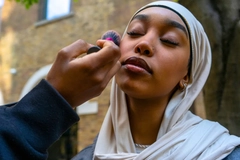
The Middle Eastern beauty market is on track to reach US$20.8 billion by 2030, up from US$14.3 billion in 2025, according to BeautyMatter’s recent report.
The global cosmetics intelligence platform says that while the worldwide beauty market grew by about 6% in 2025, the Middle East and Africa grew by 16%, making it one of the fastest-growing beauty regions globally.
The report examines the six Gulf Cooperation Council (GCC) nations — Bahrain, Kuwait, Oman, Qatar, Saudi Arabia, and the United Arab Emirates (UAE) — as a unified economic bloc valued at US$2.3 trillion.
“Saudi Arabia dominates the region, accounting for roughly 40% of the GCC’s total beauty spending,” says the report. “However, the UAE, Kuwait, Qatar, and Bahrain are collectively driving innovation in retail format and brand positioning.”
Saudi Arabia’s fragrance market reached a US$2.9 billion valuation in 2025. The Kingdom’s per-capita beauty spending amounts to US$164.9, which, according to BeautyMatter, is ahead of most Western European markets.
The report, 2026: GCC In Focus — Middle East Beauty Market Past Present Future, attributes the region’s beauty growth to a young, digitally connected demographic. It notes that over half of the GCC’s population is under 30. Moreover, it says rapid urbanization and rising disposable incomes are driving demand for consumer products and modern retail formats.
The report calls the Arab beauty consumer “one of the most sophisticated in the world.”
“The consumers here are incredibly knowledgeable, highly digitally connected, and exceptionally discerning. They’re willing to invest in premium products, but only if those products genuinely perform.” The report projects premium beauty will outpace mass beauty across every GCC market through 2030.
“The next chapter of GCC beauty will be defined by scale, specificity, and resilience,” says the report. “Demographic momentum, wealth concentration, and an increasingly sophisticated founder, investor, and regulatory ecosystem will keep the region on a long-term trajectory.”
Giants gain foothold as domestics scale
Beauty Matters’ report exemplifies the region’s growth with GCC-born brands, such as Huda Beauty, Kayali, Amouage, and Lattafa, which now operate on the global market.
“The region is morphing from a strategically important consumption market to an ‘innovation hub,’” the report states. “It is no longer simply preserving cultural beauty codes; it is actively shaping the future of beauty.”
.webp) The Middle Eastern beauty market is expected to reach US$20.8 billion by 2030.L’Oréal, Coty, and other multinational beauty giants have deepened their investments in the Middle East over the past few years. L’Oréal plans to double its Saudi workforce by the end of 2026, and the company’s Middle East division ranked among the group’s top five growth contributors globally for 2025.
The Middle Eastern beauty market is expected to reach US$20.8 billion by 2030.L’Oréal, Coty, and other multinational beauty giants have deepened their investments in the Middle East over the past few years. L’Oréal plans to double its Saudi workforce by the end of 2026, and the company’s Middle East division ranked among the group’s top five growth contributors globally for 2025.
“Saudi Arabia is not just a market we serve. It is one we are actively co-building with,” says Manuel Villaveces, general manager of Professional Products at L’Oréal Middle East.
Villaveces notes that the growing young consumer base is “reshaping beauty standards.” He forecasts that technology may play an increasingly large role in the region’s cosmetics industry.
“The future of beauty in Saudi Arabia over the next five years will be defined by hyperpersonalization, seamless connectivity, and purposeful, tech-driven experiences. Saudi Arabia is rapidly transforming from a consumer market into a leading incubator and testing ground for global beauty innovation,” he says.
Moreover, Ulta Beauty has entered the region through its franchise partner Alshaya Group. It opened first in Kuwait in November 2025, then in the Mall of the Emirates in January 2026, and in the UAE’s Dubai Mall in March. It also has a Saudi opening planned for later this year.
“Beauty remains a resilient category, and our unique proposition — bringing makeup, hair care, skin care, and fragrance together in one place accessible to luxury, local, and international brands — is clearly resonating with shoppers,” says Rebecca Jobo, president of Wellness at Alshaya Group.
Fragrance spotlight
The report highlights fragrance as a particularly lucrative category for growth in the Middle East’s beauty market.
“Arab people love fragrances. And they pay more attention to what a fragrance smells like, as opposed to the brand or packaging,” says Xavier Renard, global head of Fine Fragrances at Givaudan.
“Saudi people have 12 to 14 fragrances in their home. Layering in Saudi Arabia is the name of the game; it’s been like this for years. The volume, the consumption — everything is bigger.”
He notes that while Saudi Arabia’s population is roughly 35 million people, they use four times more fragrance than anyone in Europe or the US. “You take your 35 million and all of a sudden Saudi becomes a country the size of 140 million people in terms of fragrance consumption; it’s huge.”
Diverse audience
The report warns that international brands have historically treated the Middle East as a monolith, despite being home to over 40 distinct ethnic and ethnoreligious groups. “While this approach may once have been enough, today’s Middle Eastern consumers are demanding a new level of cultural relevance and reliability,” it says.
.webp) Saudi Arabia makes up about 40% of GCC beauty spending and is becoming a key market for fragrance and beauty innovation.The GCC economy is valued at approximately US$2.3 trillion, bringing it on par with France or Italy. Within the GCC, Saudi Arabia and the UAE account for roughly 77% of the bloc’s GDP (gross domestic product).
Saudi Arabia makes up about 40% of GCC beauty spending and is becoming a key market for fragrance and beauty innovation.The GCC economy is valued at approximately US$2.3 trillion, bringing it on par with France or Italy. Within the GCC, Saudi Arabia and the UAE account for roughly 77% of the bloc’s GDP (gross domestic product).
Population growth is expected to climb steadily at around 2% year-over-year. The UN projects that the region’s population will reach 83.6 million by 2050.
“The Middle East is on the verge of a skin care revolution, and Gen Z is at the forefront. They’re curious, experimental, and hungry for knowledge, which means the market is only going to soar,” says Dina Sidani, founder of Ilik, a personalized prescription skin care brand from Dubai, UAE.
Turbulent, but tenacious
While the Middle East is projected to achieve steady beauty growth, global personal care giants are weighing their strategies to operate in the region amid ongoing macroeconomic tensions.
In February, Personal Care Insights spoke with Schwan Cosmetics, who told us that the Middle Eastern market’s volatile economy, varying regulatory frameworks, and climate-related constraints are a litmus test for brands aiming to gain a foothold.
When tensions between the US and Iran heated up in March, the personal care industry was presented with a raw material shortage and supply chain disruptions. Cosmetic chemicals manufacturers BASF and Ashland reacted by adapting pricing across their respective portfolios. By April, Wacker Chemie, Dow, Lanxess, and Nouryon adopted the same strategy to skirt the impacts of the war.
Some personal care companies opted for more targeted mitigation strategies, such as increased financial support to suppliers or diversified sourcing.
Despite the hurdles the area currently presents, some cosmetic businesses assert their continued efforts to strengthen their local foothold.
“We have to look beyond the current geopolitics right now because we are not scaling back our efforts. The Middle East is a vital area,” says Max Heinemann, co-CEO at Heinemann, a German-founded global duty-free travel retailer with headquarters in Dubai.