



Flo Health: Bridging personal and health care for faster endometriosis diagnoses


Key takeaways
- Flo finds that symptom checkers can reduce the time to an endometriosis diagnosis by over four years, improving health outcomes.
- Using digital tools alongside traditional care can save patients approximately US$5,196 in medical costs and improve overall quality of life.
- Education and reliable information on endometriosis are crucial to addressing the under-recognition and care gaps in women’s health.

It takes almost seven years for women to receive an endometriosis diagnosis, but Flo Health has found that when digital tools are used as intended, they can cut that time in half.
The female technology (femtech) company has discovered that solutions like its Symptom Checker can reduce getting a diagnosis by over four years (or +50% sooner) and reduce costs by thousands of dollars per patient in the US.
Flo’s medical advisors report witnessing female patients having endured years of pain and suffering due to undiagnosed endometriosis before they came to see them.
“There is an acute need for reliable, easily-accessible information and guidance on endometriosis, and Flo is uniquely positioned to help meet this need for millions of women worldwide,” Dr. Anna Klepchukova, Flo Health’s chief medical officer, tells Personal Care Insights regarding the industry’s role in solving the endometriosis diagnosis gap.
Flo aims to fill this void by providing education and accurate information to shorten the time to diagnosis. To date, over 2.7 million women in the US have used Flo’s Symptom Checker for support with endometriosis. The women’s health and wellness company offers an app for tracking menstrual cycles, ovulation, and overall reproductive health.
A peer-reviewed study from research collaborators and scientists at Flo Health has found that when the Symptom Checker is used with standard care, there is a modest improvement in quality-adjusted life years. This is said to be equivalent to an addition of nearly three weeks of healthy life per patient, enabled by earlier diagnosis and treatment.
Additionally, from reduced medical costs and less productivity loss, each person can save approximately US$5,196 over a 40-year timespan. A net monetary benefit of US$10,089 per person also reflects combined financial savings and the value of improved health outcomes.
Together, the findings suggest that digital symptom checkers can help shorten diagnostic delays, improve health outcomes, and reduce long-term economic burden. Symptom checkers help bridge a gap in women’s health care.
Unrecognized care and opportunity
Despite affecting an estimated 190 million women worldwide, endometriosis, a chronic gynecologic condition, remains widely under-recognized across health care systems.
Klepchukova tells us that health education is a crucial part of the gap in endometriosis care.
“In general, female health knowledge is very low. We’ve seen this in several research studies and surveys. For example, in a study we published in 2025, fewer than four out of 10 study participants knew the typical length of [what is considered] a ‘normal’ fertile window,” she says.
“Most women don’t have adequate levels of knowledge of female reproductive health, and this is also the case for knowledge about female health conditions.”
The chief medical officer details that there is whitespace in the personal care industry to innovate. “There is a significant opportunity to empower women with better knowledge about their own bodies.”
The intimate care sector has grown significantly in the past few years, with more players and product debuts. What was once seen as a taboo category has been propelled into the mainstream.
We recently sat down with O Positiv, Honey Pot, and WeNatal in three separate interviews to discuss the expansion of the female health category.
Kathryn Pratt, SVP of marketing and innovation at Beacon Wellness Brands, recently told us that the destigmatization of intimate wellness has changed consumer demands. She said the sector has expanded rapidly, and “credible education and inclusive dialogue haven’t kept pace with consumer interest.”
Flo’s research and other blank spaces highlight that there are significant, research-backed opportunities within this space. Brands in the sector can create digitally-led tools and products to help consumers bridge the gap between their symptoms and treatment.
Personal–health care convergence
Women with endometriosis spend approximately seven years moving through fragmented care pathways and limited symptom awareness before receiving an official diagnosis. This is all navigated while living with severe menstrual cramps, chronic pelvic pain, or pain during intercourse.
Flo says that enabling diagnosis up to four years earlier could significantly mitigate the consequences of late detection and improve disease burden over time. 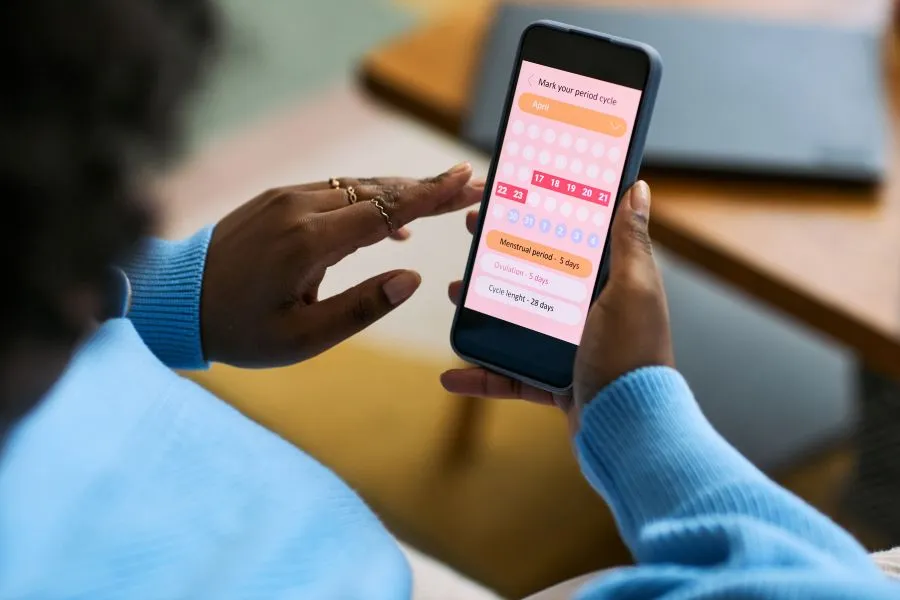 Femtech is technology designed specifically for women’s health.
Published in npj Digital Medicine, the study evaluated the health and economic impact of digital tools, such as Flo Health’s Symptom Checker, specifically for endometriosis. The research is the first economic evaluation of a digital symptom checker for endometriosis. It demonstrates how digital health technology can help address systemic challenges in women’s health care.
Women’s personal care and health care are increasingly converging as consumers seek products that address both well-being and prevention. The convergence is evident in femtech, where solutions for conditions like menstrual health, fertility, and menopause overlap with traditional health care offerings.
“At Flo, we believe there is a plethora of opportunity for symbiotic relationships between health care professionals and digital health platforms, and we have embedded these in our own processes,” explains Klepchukova.
Technologies like symptom checkers, health-tracking apps, and personalized care plans are bridging the gap between self-care and medical intervention. For conditions like endometriosis, the personal–health care fusion helps overcome systemic care challenges, enabling earlier diagnosis, reducing long-term health burdens, and improving overall well-being.
“Our medical team guides the education and features our users get through the Flo app, and simultaneously, we hear from our medical advisory board members about the benefits of their patients coming to them with a history of symptoms and cycle tracking all in one place.”
Klepchukova says the best digital health platforms are those that lean on medical expertise to ensure the content their users are consuming and the technologies they are using are medically accurate and verified.
“In return, users visit doctors’ offices with relevant and actionable insights about their menstrual cycle and symptom history. This makes life better for patients and their doctors when medical teams and digital health platforms work together,” she details.
Reclaiming care
To conduct the research, Flo’s science team partnered with academic researchers from The London School of Hygiene & Tropical Medicine and York Health Economic Consortium, UK, to evaluate the cost-effectiveness of Flo’s Symptom Checker alongside standard doctor-led care, compared with standard care alone.
By focusing on economic value alongside health outcomes, the study contributes to a growing evidence base on how digital health tools can be evaluated beyond accuracy. The authors suggest that similar modeling approaches could inform future research on digital tools for other under-recognized women’s health conditions.  Flo Health empowers women with vital reproductive health knowledge.
Overall, in the study, symptom checkers demonstrated the greatest value realized when their accuracy is above 70%, user compliance exceeds 45%, and when the outcomes are evaluated over a time horizon of at least 10 years.
“Endometriosis can deeply disrupt women’s lives, yet many spend years searching for answers within a system that hasn’t always been designed to connect the patterns they experience over time,” says Klepchukova.
“This research explores how digital tools may help women better recognize their symptoms and bring clearer insights into conversations with their health care providers. While these tools aren’t diagnostic, they support earlier awareness and more informed decisions, ultimately changing the trajectory of their care and their lives.”