



Personal Care Insights reviews 2025: Regulatory crackdowns, trade disruptions & ethical scrutiny


Key takeaways
- Regulatory scrutiny intensified worldwide, with ingredient bans, stricter compliance rules, and enforcement reshaping how beauty products are formulated and sold.
- Trade tensions and supply chain disruptions escalated, as tariffs, export restrictions, and geopolitical uncertainty drove up costs and forced companies to rethink sourcing.
- There was growing pressure on brands to address consumer safety, social equity, and transparency across sourcing, marketing, and innovation.
This year the personal care industry was defined by regulatory pressures, growing concerns about safety, and an increased awareness of social and environmental responsibility. Calls to ban harmful ingredients like formaldehyde, talc, and mercury intensified. Geopolitical tensions, including tariffs and trade disruptions, challenged supply chains.
Social responsibility also came to the forefront, with issues like racial inequality, period poverty, and the hidden costs of ingredient sourcing sparking conversation. Additionally, controversies over kids’ use of skin care highlighted the increasing demand for safe practices in the industry.
Amid these challenges, technological and product innovations flourished. AI-driven tools and biotech actives reshaped product development and heightened personalization. Trends like longevity-focused skin care and lab-grown skin for testing gained traction. However, the advancements also highlighted the need for greater transparency and accountability, as sustainable and ethical practices from beauty brands become an expectation.
January
FDA’s “moral failure”: EWG calls for ban of formaldehyde in hair products
The Environmental Working Group (EWG) condemned the FDA for its continued delays in banning formaldehyde in hair-straightening products. The organization said the agency is putting salon workers and consumers at risk. The federal government’s Unified Agenda of upcoming rules revealed that the FDA will review the proposed ban in March 2025. The FDA missed a series of self-imposed deadlines for releasing the proposal in 2024.
US cosmetics companies failing on FDA compliance as industry eyes Trump nominations
Regulatory compliance firm Registrar Corp found that approximately half (48%) of the companies selling imported cosmetics at America’s top 25 retailers were non-compliant with the US FDA’s cosmetics regulations. The personal care industry anticipated how incoming US health department appointees under the new Trump presidency might address this potential threat to consumer safety. Personal Care Insights spoke to David Lennarz, president of Registrar Corp, about how the US government should combat cosmetics that are not compliant with national safety measures..jpg) Revieve’s founder and CEO shared his thoughts about the trends and challenges of an industry increasingly turning to AI.
Revieve’s founder and CEO shared his thoughts about the trends and challenges of an industry increasingly turning to AI.
The Multibank, Amazon and sports fans join to fight childhood hygiene poverty
The Multibank, a charity founded by former UK Prime Minister Gordon Brown to tackle childhood hygiene poverty, increased its campaign efforts with multiple collaborations. Hygiene poverty affects 4.2 million people in the UK, according to community initiative The Hygiene Bank. Amazon launched a drive for Multibank to bring 250,000 self-care products to families who cannot afford basic hygiene necessities.
Haut.AI makes SkinGPT commercially available for beauty brands
Haut.AI launched SkinGPT commercially, transitioning from a solely B2B business model. The AI company also launched Generative.Skin: Library of Ingredient Effects, a website for users to explore how skin care ingredients impact their skin. SkinGPT uses AI to create synthetic images illustrating how skin can change over time due to environmental factors and skin care products.
Ectoin named the biotech active for skin protection and anti-aging
Ectoin became one of the most sought after active ingredients in the personal care industry, highlighted by its increased use in product formulations. In skin care, it creates long-lasting hydration, strengthens skin barriers, and reduces inflammation, making ectoin a valuable ingredient for sensitive and aging skin products. Personal Care Insights spoke to Bitop AG, the original manufacturer of ectoin, about its expanded manufacturing capacity in recent years to meet the increasing global demand for the ingredient.
February
International Flavors and Fragrances (IFF) launched an AI-driven app that collects real-time consumer feedback to improve fragrance innovation. ScentChat enables direct communication between consumers and fragrance creators, as the industry is increasingly interested in AI solutions for faster and smarter innovation.
Boots 2025 Beauty Trends Report reveals six upcoming industry shifts
Boots released its annual Beauty Trends Report for 2025. Some of its predictions included the rise of digitally native beauty brands, intergenerational beauty influence, elevated night-time skin care routines, and scent as self-care. The UK beauty retailer also forecasted a merging of health and beauty alongside an increasing consumer demand for a mix of luxury and budget-friendly products.
US activists find Black women face greater health risks from personal care products
The EWG found that Black women face disproportionate health risks from the toxicity of personal care products marketed to them. A co-author of the study claimed that Black women face pressure to use beauty products that help them conform to societal norms — such as relaxing their hair or participating in skin lightening. Personal Care Insights broke down the research relating to injustice in the beauty industry. .png) We spoke with James Rogers about how producers of synthetic hair should take action to increase safety testing.
We spoke with James Rogers about how producers of synthetic hair should take action to increase safety testing.
Trump’s tariffs: US-based personal care companies discuss shifting global marketplace
The Personal Care Products Council released a letter expressing “significant concerns” about potential policy changes under the Trump administration that could increase consumer prices for beauty products. Multiple US companies shared their expectations with us on how incoming tariffs might affect the personal care industry. Some US-based beauty companies were confident they could navigate the changes.
California bill seeks to ban anti-aging skin care for minors after industry inaction
California, US, introduced legislation to ban anti-aging products for minors in response to the increasing number of kids using skin care designed for adults. California Assemblymember Alex Lee aired his frustrations to Personal Care Insights on how the cosmetics industry is letting children down by prioritizing profits over their health. He said the industry knows that kids don’t need anti-aging products but has not taken “meaningful action” to combat the growing issue.
March
International Women’s Day: NGOs urge personal care industry to address period poverty
The personal care industry plays a major role in perpetuating global period poverty, and while some companies have taken strides to reduce the problem, it is far from eradicated. Personal Care Insights spoke to non-profits about how the industry can battle period poverty and how the inaccessibility is often exacerbated during geopolitical crises.
The Gen Z Effect: Revieve study finds digital natives reshaping beauty industry
Revieve released The Gen Z Effect Report, revealing how the youngest generation of beauty shoppers influences the beauty industry. We spoke to Revieve CEO Sampo Parkkinen about how Gen Z is actively shaping brand narratives through co-creation, social media, and accountability. The report underscored a shift away from traditional brand loyalty, with younger consumers prioritizing efficacy and ethics over name recognition.
Mad about mercury: Toxic cosmetics remain on global market amid regulatory failings
Watchdog groups revealed that major regulatory loopholes, the rise of informal supply chains, and social media fuel the sale of toxic cosmetics, especially in regions with higher poverty. BAN Toxics and ZMWG investigations revealed that social media platforms continue to show ads for mercury-containing products, despite the ingredient being banned in dozens of countries and classified by the WHO as one of the most dangerous chemicals to public health.
Salmon sperm facials trend as consumers seek natural skin rejuvenation solutions
Salmon sperm facials, also known as PDRN therapy, gained international attention in the beauty industry as a synthetic-free alternative to traditional fillers. The scientifically-backed treatment restores skin vitality at the cellular level as biostimulators work to promote natural collagen and elastin production. We explored why PDRN has become a go-to solution for skin rejuvenation amid celebrity endorsements and viral social media attention.
Tit-for-tat tariffs: Beauty giants ask EU to exclude American cosmetics from trade war
A group of European beauty executives urged the EU to exclude American cosmetic goods from its tariff rollout, warning that trade changes would hurt the EU’s personal care industry — one of the region’s biggest sectors. Following US President Donald Trump’s promise to impose a 25% tariff on steel and aluminum, the EU published a 99-page list of counter-tariffs on US goods, including shampoos, perfumes, aftershaves, and sunscreens. A Beiersdorf spokesperson told Personal Care Insights that the alliance hoped retaliatory measures do not escalate. .png) International Flavors and Fragrances presented its Xelestia range at In-cosmetics Global 2025.
International Flavors and Fragrances presented its Xelestia range at In-cosmetics Global 2025.
April
Personal care industry opposes EU’s potential ethanol reclassification
The European Commission (EC) announced it might reclassify ethanol as a CMR (carcinogenic, mutagenic, or reprotoxic) substance, banning it from all cosmetic formulas. If passed, the ban would include fragrances, perfumes, body lotions, hand sanitizers, and home products. The potential ban caused discussion among industry players, who told us the science is based on oral ethanol consumption, not when topically applied to the skin.
EU REACH reform to increase costs and compliance pressure for cosmetics industry
The European Commission proposed a major update to the REACH Regulation, introducing stricter rules directly impacting cosmetics companies retailing in the EU. The changes aim to improve chemical safety but could significantly increase costs and compliance work, especially for smaller businesses. Under the update, REACH substance registrations will only be valid for ten years instead of the current rule of applying indefinitely, which adds extra costs and paperwork to business operations.
Beef fat in beauty: Heritage ingredient returns but dermatologists flag drawbacks
Beef tallow’s use in moisturizing products gained traction after interest in the ingredient surged on social media. However, dermatologists hold reservations regarding the claims for beef tallow in skin care, citing the limited scientific research on its efficiency. Personal Care Insights spoke to a consultant dermatologist at GetHarley about her concerns regarding the rising use of the ingredient.
European Commission records all-time high of dangerous cosmetics from China
Cosmetic products from China hit an all-time high in the EC’s safety alert system, leading the governing body to issue a warning. The alerts outlined products that threaten human health and safety. We spoke to an Amazon spokesperson about consumer-retailer responsibility.
Price hikes, layoffs and alternative markets: Personal care navigates US tariff troubles
Personal care companies deliberated how to address the massive rollout of US tariffs and navigate an uncertain economic climate. Some passed the extra costs to consumers, while others targeted different international markets and cut staff. We examined how Croda International, Saks Global, Amorepacific, and others dealt with the tariff impact. .jpg) Givaudan unveiled DandErase, Evernityl, and PrimalHyal UltraReverse at In-cosmetics Global 2025.
Givaudan unveiled DandErase, Evernityl, and PrimalHyal UltraReverse at In-cosmetics Global 2025.
May
Unilever to shut down REN Clean Skincare amid market challenges
Unilever closed its skin care brand REN, citing “a combination of internal factors, compounded by market challenges in recent years” as the reason for the business closure. The FMCG giant said the brand is unable to sustain success in the long term.
Drunk Elephant sales drop after “Sephora kids” tarnished brand reputation
Drunk Elephant’s sales dropped 65% year-over-year in the first quarter of 2025. Through social media, Drunk Elephant gained popularity among Gen Z and Gen Alpha consumers, but struggled to retain its original Millennial and Gen X audience. Personal Care Insights spoke with an industry analyst from Innova Market Insights about how the company’s viral “Sephora kids” moment backfired in the long term.
US FDA panel recommends banning talc powder amid rising health fears
The US FDA invited experts to discuss the dangers of talc in cosmetics, and the international panel unanimously favored a ban. Concerns that talc from personal care products can travel through the body, stay in tissue, and cause serious health effects are proliferating. Personal Care Insights attended the panel and broke down the sentiment and fears of using talc in cosmetics.
EU bans and restricts dozens of dangerous cosmetic ingredients
The European Commission banned and restricted a wide range of cosmetic ingredients deemed unsafe, including commonly used substances like sodium perborate, silver, and hexylsalicylate. The changes were part of the proposed Omnibus Act VIII, which updates the EU Cosmetics Regulation. The change impacts the formulation, labeling, and marketability of personal care products across the EU.
EU-US trade tensions: Beauty giant stocks jolt amid tariff uncertainty
US President Donald Trump’s initial threat to impose 50% tariffs on EU imports sent L’Oréal and LVMH stocks falling, but a last-minute delay offered temporary relief. The transatlantic trade tensions threatened EU personal care exports worth billions. The French Cosmetic Industry Association called for a swift, balanced agreement.
June
Cosmetic Business 2025: Natural ingredients and longevity shape new skin care
Longevity became a buzzword in the personal care industry, with businesses viewing healthy aging through a holistic lens underscored by natural ingredients and biotechnology. Personal Care Insights spoke to industry experts at Cosmetic Business 2025 about how consumers demand solutions that cater to their specific skin care needs and align with their moral beliefs.
Fragmented supply chains “paralyze” beauty brands threatening billions in revenue
Atelier and Accenture warned that beauty brands risk forfeiting billions in annual revenue if they do not adapt their “fragmented, linear, and archaic” supply chains. We spoke to three industry experts on how the industry can implement AI-powered and composable manufacturing to meet consumers’ demand for new products..jpg) The Skin Cancer Foundation discussed the anti-SPF movement on social media.
The Skin Cancer Foundation discussed the anti-SPF movement on social media.
Disaster to development: Turning invasive algae into sustainable cosmetics
Origin by Ocean turns invasive brown algae, which is causing an environmental disaster, into sustainable cosmetic ingredients. The companies announced they were opening a biorefinery in Kokkola, Finland, to address the need for ecological alternatives in the cosmetics industry as it transitions away from fossil-based ingredients. The company’s CEO told us about the potential of Sargassum’s use in beauty products.
Sustainable sourcing: Industry partners for humanization of women in shea supply chains
The Global Shea Alliance (GSA), EOS Products, and non-profit Water for West Africa partnered to empower female shea processors in Northern Ghana and Côte d’Ivoire. The program was designed to strengthen the capacity of women in shea kernel and butter processing. We spoke to GSA about how the personal care industry needs to make greater strides in supporting these women.
US sunscreen reform: New bill targets accelerated product innovation
US lawmakers introduced a bill to reform how the FDA evaluates and approves over-the-counter sun protection. In the US, sunscreens are an FDA-regulated drug product, meaning they must meet standards related to the safety and effectiveness of this categorization. The SAFE Sunscreen Standards Act aims to modernize the FDA’s sunscreen ingredient review process.
July
K-beauty takeover: South Korea passes US as second-largest cosmetic exporter
South Korea became the second-largest global cosmetics exporter, surpassing the US and trailing behind France. According to the Korea International Trade Association, the country exported US$3.61 billion worth of beauty products from January to April, edging out the US with US$3.57 billion. To maintain its cosmetic export growth, South Korea discussed measures to reduce technical barriers to trade with China.
Natural vs sustainable: Cosmetic ingredients’ exploitation of environmental resources
Natural cosmetic ingredients require large amounts of environmental resources, complicating sustainability in the manufacturing process. Therefore, assuming natural means sustainable creates a fine line to greenwashing. We spoke to industry experts to discuss the complexity of sustainability that the natural cosmetics industry faces.
EU Omnibus Act: Financial gains, consumer safety and CMRs spark debate
The EC unveiled a simplification package of chemical regulations, arguing it would save the industry millions. However, the move sparked concerns from green advocates who accuse the EC of sacrificing consumer safety. The changes apply to Classification, Labeling, and Packaging and chemical regulations. We spoke to Natrue about how the regulations will benefit SMEs in the natural cosmetics market.
Water crisis endangers menstrual health: Industry’s role in fighting period poverty
Limited access to clean water presents significant challenges to safe, dignified menstrual management. According to Simavi, of the 800 million people who are menstruating daily, 500 million do not have the resources they need to manage their period, including clean water. Personal Care Insights spoke with several NGOs to explore how the industry can play a vital role in addressing the stigma and health risks associated with water access and period care. 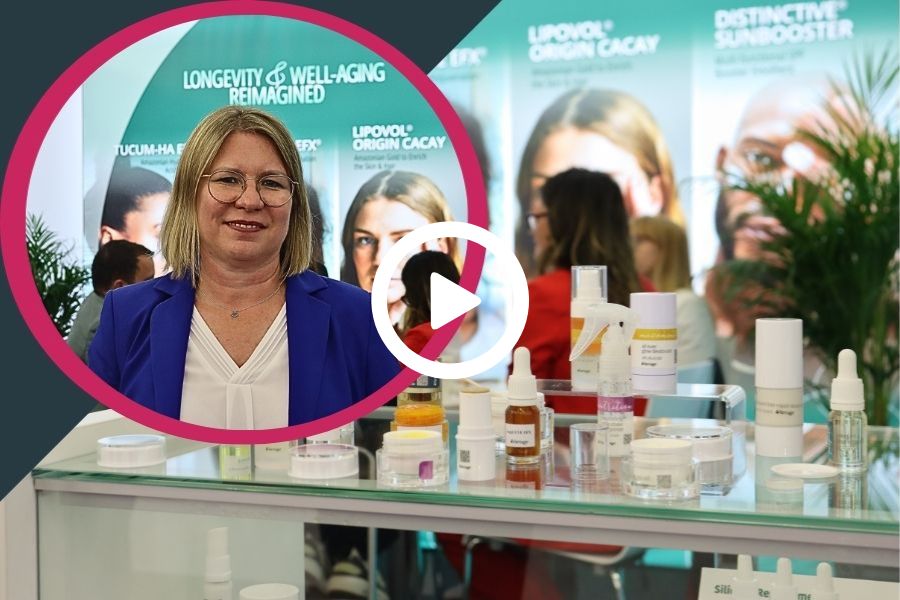 Vantage debuts its longevity-based skin and hair care solutions at Cosmetic Business 2025.
Counterfeit cosmetics now an industry-wide issue, warns transnational alliance
Counterfeit cosmetics are rising due to the e-commerce and social media boom. We spoke with Jeffrey Hardy, director-general at the Transnational Alliance to Combat Illicit Trade, about the health dangers of fake products and the industry’s responsibility in monitoring their brands on digital platforms.
August
Animal testing lab closure exposes “pointless cruelty” in women’s health research
A PETA (People for the Ethical Treatment of Animals) campaign shut down menopause experiments on monkeys at the University of Massachusetts-Amherst, US. The animal rights organization said the lab spent over 10 years performing “scientifically-flawed” experiments on marmosets. These animals do not experience menopause. Dr. Julia Baines from PETA told us that animal experimentation is “worthless,” and when used to advance women’s care, only passes down oppression.
Ozempic face: Weight loss drugs spark demand for targeted skin care
Weight-loss medication Ozempic is popular for its fast slimming effects, but reports of skin-related side effects, including premature aging, emerged. Responding to this issue, skin care brands created targeted solutions for what has been deemed “Ozempic face.” Image Skincare launched a skin rebound complex, specifically targeting skin issues following the use of GLP-1 drugs.
Estée Lauder reports US$1B loss amid sales declines, restructuring and tariff pressures
The Estée Lauder Companies reported a net loss of US$1.13 billion for fiscal 2025. Restructuring costs, falling sales, and looming tariff pressures weighed on results. The company said it expects tariffs to weigh heavily on its near-term results. Based on current information and its net of mitigation measures, tariff-related headwinds are forecast to reduce FY2026 profitability by about US$100 million.
US President Donald Trump imposed 50% tariffs on 407 aluminum and steel product categories, impacting the personal care industry. What was originally discussed as a 25% tariff on raw materials was doubled and extended to goods containing or contained in these materials. The move was predicted to impact import costs and raise consumer prices significantly.
Nigeria bans raw shea nut exports to boost domestic processing and global market share
Nigeria’s government imposed an immediate ban on exporting raw shea nuts to boost the country’s position as a global supplier of refined shea butter and other skin care products. The ban was announced to remain for six months, after which it would be assessed for review. The shea market has a strong foothold in the personal care industry. .jpg) Kenvue highlighted the benefits of colloidal oats in baby care formulations.
Kenvue highlighted the benefits of colloidal oats in baby care formulations.
September
WHO recognizes sunscreen as essential medicine
The WHO added sunscreen to its Model List of Essential Medicines, recognizing it as a crucial preventive medicine. The list guides countries in identifying the most vital health products for their populations. Sunscreen is now recognized alongside treatments for infectious diseases and chronic conditions. The classification aims to improve access and reduce UV-related diseases globally.
US FDA opens public portal for reporting cosmetic adverse events
The US FDA launched a public dashboard, giving consumers “real-time” access to reported adverse events from cosmetics. The move aims to increase transparency and is part of the FDA’s modernization strategy under the Modernization of Cosmetics Regulation Act of 2022. However, the FDA noted that the accounts are not verified and do not confirm a product’s safety risk.
Goodbye Google? Generative AI emerges as “beauty’s new SEO”
Social media and AI-powered tools are changing the way beauty consumers find brands. According to Spate’s September 2025 report, generative AI search “transformed information discovery,” as it yields results as fast as traditional Google search. The beauty market researcher described generative engine optimization as “beauty’s new SEO,” but says many brands are still trapped in legacy thinking. Emily Rose Campbell, head of performance at Iced Media, told us that beauty businesses failing to expand their discovery strategies into platforms like ChatGPT, TikTok, and Reddit may risk becoming “invisible.”
Colgate agrees to alter toothpaste packaging after Texas AG probe
Colgate-Palmolive agreed to change the marketing of its children’s toothpaste after US Texas Attorney General Ken Paxton called its fluoride advertising “misleading and dangerous.” Paxton alleged that the companies’ fluoride toothpaste packaging displayed more than the recommended amount. The move came amid mounting scrutiny of fluoride’s potential risks to children’s health.
Skin in the game: CTIBiotech pioneers “monumental leap” for cosmetics testing
CTIBiotech presented its lab-grown, computer-connected bioprinted skin at the IFSCC 2025 Congress in Cannes, France. The primary purpose of lab-grown skin is to reduce reliance on animal testing while enhancing the accuracy and speed of cosmetics and fragrance testing processes. CEO Dr. Nico Forraz told us that the innovation includes a functional sensory nervous system, replicating human skin.  (2) 1.webp) Cruelty Free International spoke to us about the gaps in the Canadian government’s final strategy on animal testing.
Cruelty Free International spoke to us about the gaps in the Canadian government’s final strategy on animal testing.
October
Kenvue considers skin health and beauty division sale amid financial decline
It was reported that Kenvue was considering selling or spinning off its skin health and beauty division, amid declining sales and health allegations tied to Tylenol. The global consumer health company had a turbulent year marked by financial losses, leadership changes, and investor pressure. Analysts reported that the division could be valued between US$6–9 billion.
US surpasses China as K-beauty’s top market amid record-breaking exports
South Korea’s cosmetics exports hit a record US$8.52 billion in the first nine months of 2025, up 15.4% from last year. The US overtook China as the top market, with skin care leading the growth. Officials attributed the K-beauty momentum to strong overseas demand and market diversification. Korean beauty products were also shipped to 205 countries, the widest reach ever recorded.
Kering sells beauty unit to L’Oréal for €4 billion
Kering agreed to sell its beauty division to L’Oréal for €4 billion (US$4.66 billion) in a move to refocus on its core fashion brands. The acquisition gives L’Oréal ownership of luxury fragrance brand Creed and exclusive licenses to develop and distribute future beauty and fragrance lines for Gucci, Bottega Veneta, and Balenciaga. Alongside the sale, the major beauty companies announced a long-term partnership in luxury beauty and wellness.
Beauty industry giants collide for cosmetic safety to end “historical lack of collaboration”
A coalition of beauty leaders — including Sephora, Ulta Beauty, and Credo Beauty — revealed that while 76% of cosmetic ingredients are verified as safe, 24% remain uncharacterized. We spoke with ChemForward about its report and the growing need for transparency and innovation across the beauty industry.
Women shea processors’ livelihoods suffer after Nigeria’s export ban backfires
Nigeria’s ban on raw shea nut exports severely impacted women’s livelihoods. The August ban was enacted immediately to help the country become a global supplier of refined shea butter. However, the move caused a collapse in nut prices and reduced market access for the women who rely on the trade for their livelihoods. The Global Shea Alliance told us there is a need for inclusive dialogue, investment in processing capacity, and short-term protections to ensure the transition strengthens livelihoods and sustainability.  (7).webp) Hagen Döring of Provital told us about its active ingredient for dull hair on a bad hair day.
Hagen Döring of Provital told us about its active ingredient for dull hair on a bad hair day.
November
Breaking news: Kimberly-Clark to acquire Kenvue in US$48.7B deal
Kimberly-Clark announced plans to acquire Kenvue in a US$48.7 billion cash-and-stock transaction. The combined company brings together major brands including Huggies, Kleenex, Band-Aid, and Tylenol. The merger creates a portfolio of 10 billion-dollar brands across the consumer health and wellness sectors. The combination represented the largest ever buyout in the US consumer goods sector.
Rini skin care for toddlers debuts to online backlash
Rini, a skin care brand for kids, stirred controversy. The dermatologist-tested line, developed with pediatric chemists in South Korea, meets EU safety standards. However, the release came in tandem with growing concerns about kids using skin care. The brand imagery portrays very young children, as little as toddlers. Many consumers asked why young kids need a skin care brand in the first place.
Interpol joins COP-6 crackdown against illegal mercury cosmetics trade
At COP-6 in Geneva, over 150 governments agreed on a global plan to crack down on mercury-added cosmetics, with the assistance of Interpol. The WHO decided to develop a strategy to curb demand for both mercury and non-mercury skin-lightening products. We spoke to the Zero Mercury Working Group about how the actions recognize mercury products’ health and social harms.
Keeping consumers through cross-industry collab: Eastman shares 2026 beauty trends
Eastman released its research for 2026, showing higher-than-expected consumer openness to sustainable solutions, even if it means switching brands. It also found that collaboration and innovation are crucial for brands to meet rising consumer expectations. Lauren Leonard, market development manager at Eastman, told us about incoming changes in formulation science and how brands can “stay ahead of the curve.”
African soil grows foreign profit: Closing the equity gap in beauty’s sourcing
Global beauty brands depend on Africa’s biodiversity for botanicals, yet local communities are often excluded from the value chain. The UN-backed Nagoya Protocol was established to ensure fair benefit-sharing, but inconsistencies have led to cosmetics companies avoiding certain ingredients. We spoke with the International Fragrance Association about the growing impact of these regulatory gaps.
December
Shark protections tighten as squalene sourcing for cosmetics drains populations
Trade restrictions revealed the prevalence of shark-derived squalene in cosmetics, which was largely hidden by weak labeling rules that left brands and consumers unaware of its origin. The International Fund for Animal Welfare discussed the need for greater transparency and sustainable alternatives.
EUDR faces second year of delays sparking criticism from climate NGOs
The European Council postponed the EU Deforestation Regulation (EUDR) until December 2026, citing technical and readiness concerns. The delay gives the cosmetics industry more time to prepare for supply chain transparency, but drew criticism from groups such as the WWF, which called the decision irresponsible.  (17) (1).png) Dr. Charis Chambers broke down the historic and systemic reasons behind the knowledge gap in women’s menstrual health.
Dr. Charis Chambers broke down the historic and systemic reasons behind the knowledge gap in women’s menstrual health.
US FDA proposes first new sunscreen active in over two decades
The US FDA proposed expanding its list of active ingredients for use in sunscreen for the first time since 1999. The government agency added bemotrizinol in an effort to advance sunscreen innovation. dsm-firmenich submitted the request to the FDA to add the ingredient at concentrations up to 6%.
O Positiv suggests women’s wellness industry capitalizes on misinformation
O Positiv revealed that almost all women cannot correctly identify basic female anatomy and called on the personal care industry to help close the education gap. Co-founder Brianna Bitton and Dr. Roxanne Pero told us that brands should normalize conversations around taboo topics, prioritize education, and avoid perpetuating health stigmas.
Hidden cost of mica: Cosmetics industry confronts India’s illegal mining labor
Behind the shimmer of cosmetic ingredient mica, beauty companies inadvertently profit from poverty and child labor. Although mining activities have been banned, the work continues due to a lack of alternative income sources. Many families, including children, rely on mica scavenging for survival, exposing them to hazardous working conditions. However, the Responsible Mica Initiative told us that the cosmetics industry is helping drive change.